
In this article
- Why the Stain Is Rarely Where the Leak Is
- How Thermal Imaging Leak Detection Works
- What a Professional Leak Inspection Covers
- Leaks Thermal Imaging Finds Most Often in Dubai
- Why Non-Destructive Leak Detection Saves You Money
- How to Prepare for a Leak Detection Visit
- What You Receive: The Leak Detection Report
- Book Thermal Imaging Leak Detection in Dubai
- Frequently Asked Questions
A brown patch on the ceiling. Paint bubbling above the skirting. A musty smell in a cupboard that never quite goes away. Every Dubai homeowner who has faced one of these knows the next question: where is the water actually coming from? Thermal imaging leak detection in Dubai answers that question without guesswork, and without breaking a row of tiles to find out.
In this guide we explain how a thermal camera finds hidden water, why it must always be backed up by moisture readings, what a proper leak inspection covers, and how the result saves you money on the repair.
Why the Stain Is Rarely Where the Leak Is
Water almost never drips straight down. Inside a building it travels along the easiest path: across a concrete slab, along a pipe sleeve, down the inside of a wall cavity, or along the top of a beam. By the time it shows up as a stain, it may have moved one or two metres away from the real source.
That is why so many leak repairs in Dubai fail. A contractor sees a stain under a bathroom, lifts the shower tiles, finds nothing obvious, re-tiles and leaves. Two weeks later the stain is back, because the actual cause was a concealed pipe joint behind the wall, an AC drain line above the ceiling, or a cracked roof upstand on the floor above.
Common hidden sources we find in Dubai villas and apartments include:
- Failed membrane or a loose floor waste under a shower
- A weeping joint on a concealed hot or cold water pipe
- AC condensate lines that have disconnected or blocked above a false ceiling
- Roof upstands, AC plinths and pipe penetrations that have cracked in the heat
- Balcony thresholds with no upturn behind the sliding door
- Water tanks leaking into the slab below

How Thermal Imaging Leak Detection Works
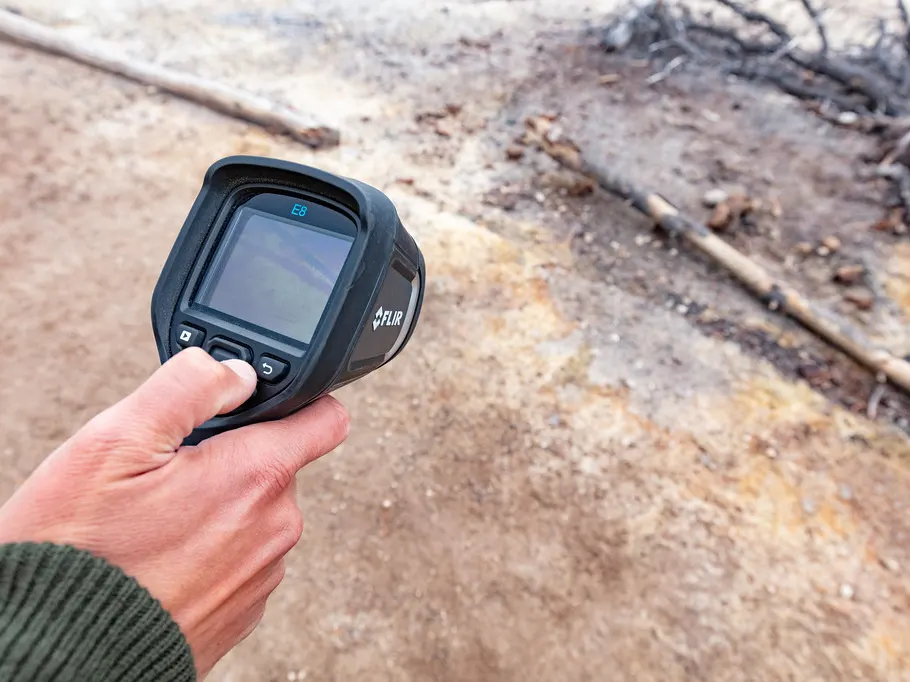
A thermal camera does not see water. It sees surface temperature. Wet materials behave differently from dry ones: water evaporates and cools the surface, and it also holds heat longer. On a thermal image, damp plaster, screed or concrete therefore shows up as a cooler or warmer patch against the dry areas around it.
The useful part is the shape of that patch. A moisture pattern that fans out from one corner, follows a straight line, or gets stronger towards a wall tells an experienced inspector which direction the water is coming from. A straight cool line across a ceiling often follows a pipe. A spreading patch around a floor drain points to a waste connection. A pattern along a roof parapet suggests a failed upstand.
Why Thermal Images Must Be Confirmed
A thermal camera on its own can mislead. Cold air from an AC diffuser, a shaded patch of wall, a hot water pipe, missing insulation or a shiny tile can all produce images that look like moisture. Anyone who quotes a large repair from a thermal photo alone is guessing.
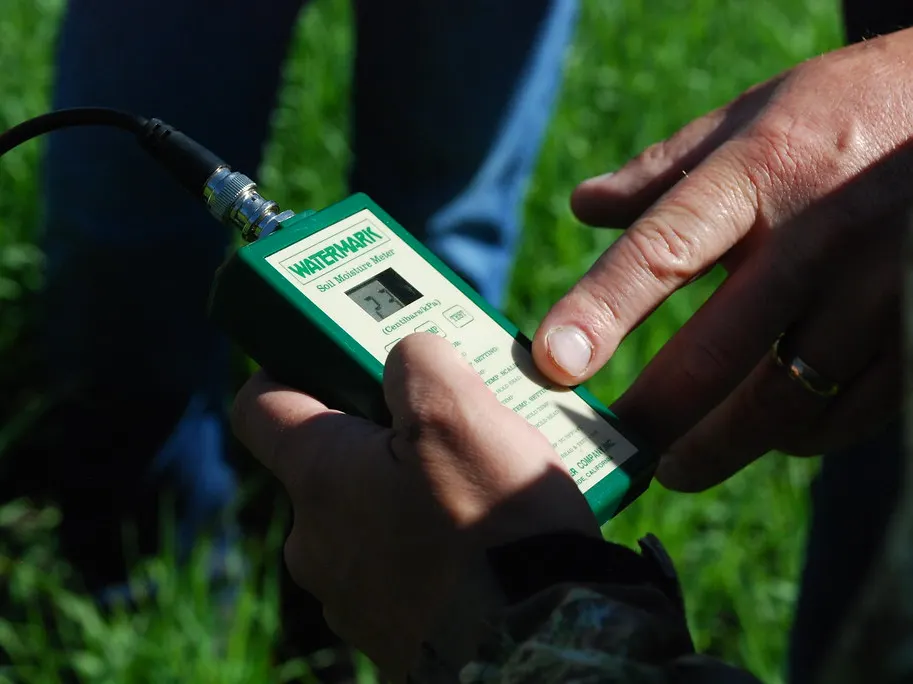
That is why every suspicious area is checked with a moisture meter. The meter gives a reading at the exact point, confirming whether the material is actually wet and how far the damp has spread. Readings are taken in a grid so the wet area can be mapped and compared with dry reference points.
Targeted Tests to Prove the Source
Once the wet area is mapped, the inspector tests the likely sources one at a time. Depending on the property, this can include:
- Running a single shower or filling a bath while the ceiling below is watched
- Ponding water on a balcony or a section of roof
- Isolating the water supply and checking whether the meter still moves
- Checking AC drain trays and condensate lines above access panels
- Inspecting roof drains, upstands and penetrations for cracks or open joints
This step turns a suspicion into a confirmed cause. It is what makes the final report useful to you, your landlord, your building management or your insurer.
What a Professional Leak Inspection Covers
A proper leak detection in Dubai visit is more than pointing a camera at a stain. A thorough inspection usually includes:
- A conversation first. When does the stain appear? After rain, after showers upstairs, when the AC runs all night, or at random? This alone often narrows the source to two or three possibilities.
- A thermal scan of the affected ceiling, walls and floors, plus the rooms above and around them.
- Moisture mapping with readings marked on a plan or photo.
- Source checks on the roof, wet areas, plumbing, AC drains and any nearby tank.
- Targeted tests to confirm the cause where possible.
- A written report with photos, thermal images, locations, causes and the recommended repair.
At Austenite we photograph every finding, so you can see exactly what we saw. Read more about our full leak detection service.
Leaks Thermal Imaging Finds Most Often in Dubai
Roof Leaks in Villas
Flat villa roofs in Dubai take enormous heat stress. Surface temperatures in summer can climb well above the air temperature, and the daily expansion and contraction opens joints at upstands, drains, AC plinths and solar frames. After the first winter rain, water gets into those joints and spreads under the screed. Thermal imaging from the room below, combined with a roof survey, usually shows which part of the roof has failed. See our guide to the top causes of roof leakage in Dubai.
Bathroom and Shower Leaks
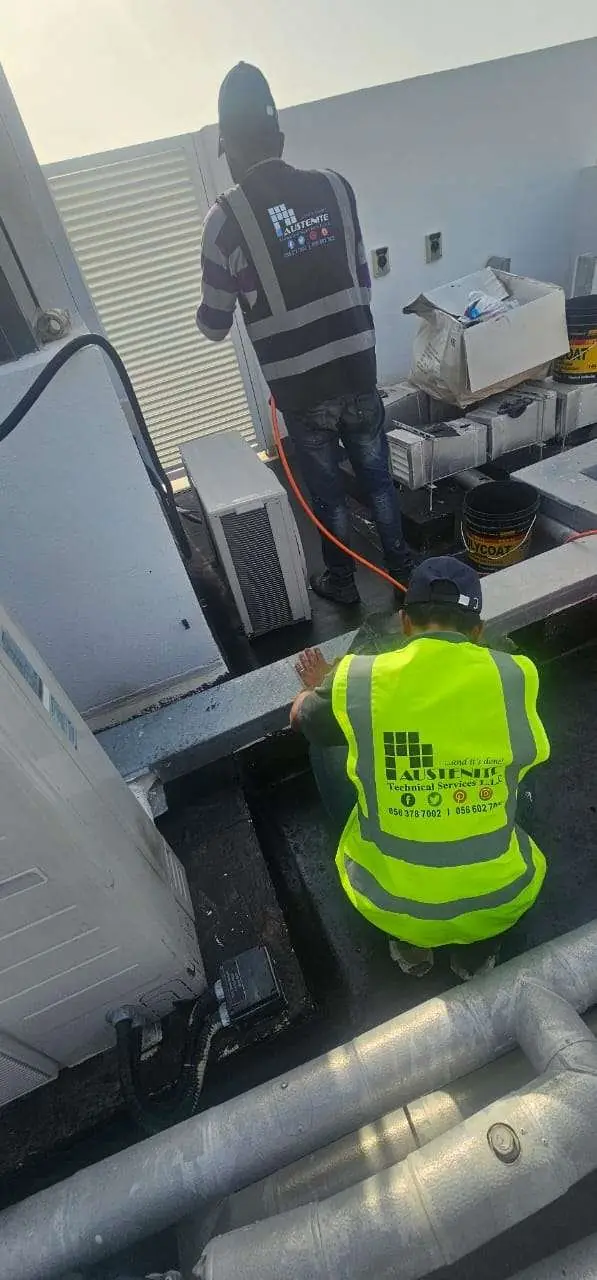
In apartments, the person who notices a bathroom leak is often the neighbour below. A thermal scan of their ceiling, combined with a controlled shower test upstairs, shows whether the cause is the membrane, a floor waste, failed grout or a concealed pipe. That difference matters, because some of those are small local repairs and some need the tiles lifted. Learn more about bathroom waterproofing in Dubai.
Concealed Plumbing Leaks
A pinhole leak in a pressurised pipe can soak a wall for months before it shows. Thermal imaging is particularly good at tracing hot water lines, because the pipe itself shows up clearly. Combined with a meter check, it avoids the classic mistake of chasing a plumbing leak as if it were a waterproofing failure.
AC Condensate Leaks
During Dubai’s long cooling season, AC units produce a surprising amount of condensate water. When a drain line blocks, cracks or disconnects above a false ceiling, the result looks exactly like a roof or bathroom leak. A thermal scan and a look through the access panel usually settle it in minutes.
Damp Walls and Mould
Damp walls with black spotting that comes back after cleaning almost always have a moisture source behind them. Thermal imaging helps separate condensation, which is a ventilation problem, from water entering the wall, which is a waterproofing or plumbing problem. Read our guide to wall mould in Dubai homes.
Why Non-Destructive Leak Detection Saves You Money
Breaking tiles to hunt for a leak is expensive. If the guess was wrong, you pay twice.
Non-destructive leak detection changes the order of work. The source is confirmed first, then the repair is planned around it. In practice this means:
- Smaller openings. If tiles must be lifted, only the ones over the confirmed source are touched.
- The right trade. A plumbing leak goes to a plumber, an AC drain to an AC technician, a membrane failure to a waterproofing team. You do not pay waterproofing prices for a loose pipe fitting.
- Clear responsibility. In a tower, a report showing the water comes from a shared shaft or the unit above helps building management and neighbours act on facts.
- Fewer repeat repairs. Fixing the cause means the stain does not come back after the next rain.
How to Prepare for a Leak Detection Visit
You can make the inspection faster and more accurate with a little preparation:
- Do not repaint the stain. Fresh paint can hide the pattern the inspection needs to read.
- Take dated photos of the stain whenever it grows or changes, and note what happened just before (rain, showers, AC use).
- Keep things running normally. Use showers and AC as usual so the conditions that cause the leak are present.
- Arrange access to the roof, the unit above or shared shafts through building management if needed.
- Clear the area so walls, ceilings and access panels can be reached.
The best time to inspect a roof leak is often soon after rain, while materials are still wet. If you see water during a storm, take photos and call promptly.
What You Receive: The Leak Detection Report
A good report is something you can act on. Ours includes normal photos and thermal images of each finding, moisture readings marked on the locations, the confirmed or likely cause, its priority, and the recommended repair with an itemised quotation.
We separate confirmed causes from likely ones. If proving a cause would require opening a finish or entering another property, the report says so and explains what the next step would be. That honesty helps you decide what to do, and it gives landlords, owners’ associations and insurers the same clear evidence.
Book Thermal Imaging Leak Detection in Dubai
A returning stain is not something to repaint and forget. Water damage spreads quietly, softens plaster, corrodes reinforcement and feeds mould. Finding the source early keeps the repair small.
Austenite Technical Services has been waterproofing and repairing Dubai homes for more than 25 years. Our team uses thermal imaging and moisture mapping to trace the real entry point before anything is opened, then gives you a photo report and a written quote for the right fix.
Book your free site inspection today. Call or WhatsApp +971 56 378 7002, or send us photos of the stain on WhatsApp and we will tell you what it probably is and whether it needs a visit.
Frequently Asked Questions
Can thermal imaging see water through walls?
Not directly. It detects temperature differences that moisture causes on the surface. Combined with moisture meter readings and targeted tests, it reliably shows where water is and which direction it is coming from.
Will anything be broken during the inspection?
No. The inspection itself is non-destructive. If an opening is needed to confirm or repair the cause, it is small and placed exactly over the confirmed source.
Can you tell if a leak is coming from my neighbour?
Often, yes. The moisture pattern usually shows the direction the water is travelling, and a controlled test in the suspected unit can confirm it.

Keep reading
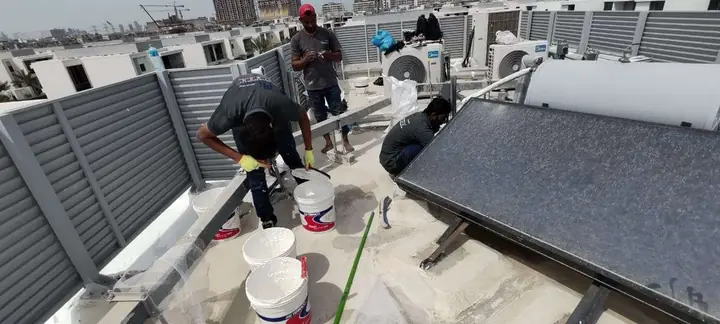
AC Units, Pipes and Solar Frames: The Hidden Roof Leak Points in Dubai Villas
Your roof membrane can be in good shape and still leak. In Dubai villas, the water usually gets in where something passes…
Read article AC Units, Pipes and Solar Frames: The Hidden Roof Leak Points in Dubai Villas
What Is a Flood Test? Why Every Waterproofing Job in Dubai Needs One Before Tiling
Waterproofing is the one part of a building you never see again once it is finished. A flood test is how you…
Read article What Is a Flood Test? Why Every Waterproofing Job in Dubai Needs One Before Tiling
Water Tank Waterproofing in Dubai: Signs Your Tank Lining Has Failed and Safe Potable Coatings
A leaking concrete water tank damages the building around it and can affect the water you drink. Here are the warning signs,…
Read article Water Tank Waterproofing in Dubai: Signs Your Tank Lining Has Failed and Safe Potable Coatings