
In this article
- Can You Waterproof a Bathroom Without Removing Tiles?
- Why Do Bathrooms Develop Water Leakage Problems?
- Bathroom Waterproofing Methods That Work Without Removing Tiles
- What Does Not Work When Waterproofing Over Existing Tiles?
- When Is Removing Bathroom Tiles Necessary?
- Step-by-Step Process for Bathroom Waterproofing Without Removing Tiles
- How Much Does Bathroom Waterproofing Cost in Dubai?
- How Long Does Bathroom Waterproofing Without Tile Removal Last?
- Signs Your Bathroom Needs Professional Waterproofing
- Bathroom Waterproofing Considerations Across Dubai Communities
- How to Choose a Bathroom Waterproofing Company in Dubai
- Frequently Asked Questions About Bathroom Waterproofing Dubai
- Conclusion: Choose the Right Bathroom Waterproofing Solution
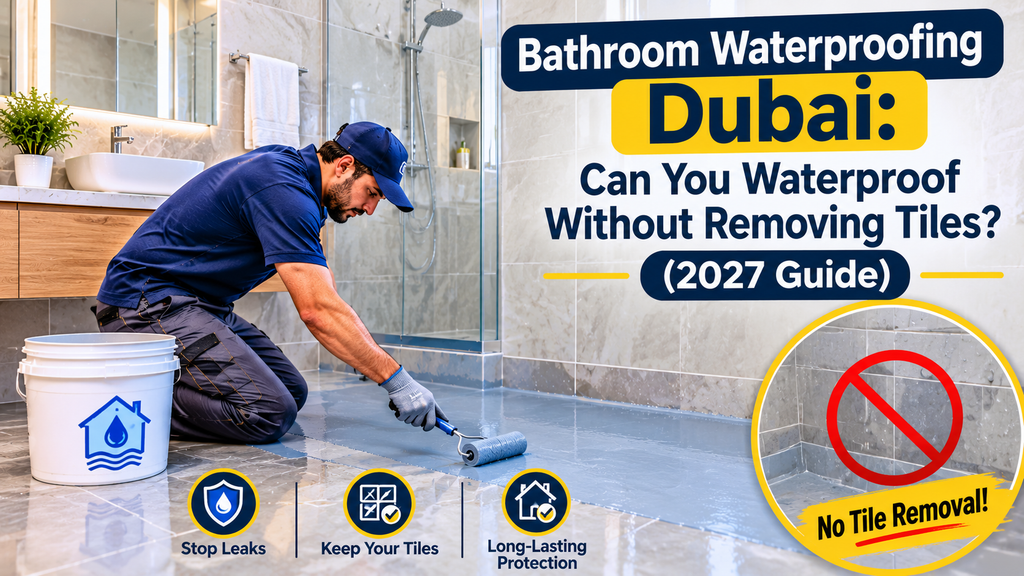
Bathroom water leakage can become an expensive problem if it is not addressed early. Damp walls, damaged grout, peeling paint and water stains on the ceiling below may indicate that moisture is escaping from the bathroom. Many homeowners want to fix the problem without removing existing tiles because demolition can create dust, noise, disruption and additional renovation costs. Professional bathroom waterproofing Dubai solutions can help address leakage issues and protect vulnerable bathroom surfaces without unnecessary disruption.
The good news is that some bathroom leakage problems can be repaired without breaking tiles. Bathroom waterproofing Dubai solutions may include regrouting, replacing damaged silicone, treating suitable tiled surfaces with specialist coatings or repairing an accessible plumbing connection. However, these methods are not suitable for every leak.
The most important distinction is between repairing a surface-level problem and restoring a failed waterproofing membrane beneath the tiles. A coating applied over existing tiles does not automatically repair the hidden waterproofing layer.
This guide explains which methods can work, what their limitations are, when tile removal becomes necessary, how much the work may cost and why professional inspection should come before choosing a repair.
Can You Waterproof a Bathroom Without Removing Tiles?
Yes, in certain situations, bathroom waterproofing without removing tiles is possible. The right method depends on the condition of the existing tiles, grout, joints, fixtures and underlying waterproofing system.
If the problem is limited to deteriorated grout, failed silicone or a small area of surface leakage, localised repairs may be sufficient. Some specialist coatings are also designed for application over compatible existing tiled surfaces.
However, if the waterproofing membrane beneath the tiles has failed, a surface treatment may not provide a reliable long-term solution. The membrane is the protective layer that prevents water from reaching the underlying screed, concrete or other building materials.
When can waterproofing over existing bathroom tiles work?
A no-tile-removal approach may be worth considering when:
- Existing tiles are firmly bonded and not cracked or hollow.
- The grout has deteriorated but the underlying membrane remains sound.
- Silicone around a shower tray, bathtub or basin has failed.
- The leak comes from an accessible fixture or plumbing connection.
- A compatible specialist coating is suitable for the tile and grout surface.
- The proposed system is approved by its manufacturer for the intended wet-area application.
When is it unlikely to work?
Surface treatment may not solve the problem when:
- The waterproofing membrane beneath the tiles has failed.
- Water is travelling through the screed or floor structure.
- Multiple tiles are loose, cracked or hollow.
- The substrate is damaged or remains persistently wet.
- Water is escaping around a defective floor waste or concealed pipe.
- Leakage continues despite appropriate joint and surface repairs.
The first step in professional bathroom waterproofing Dubai work should therefore be identifying the actual source of moisture. Do not choose a coating simply because it avoids demolition.
Why Do Bathrooms Develop Water Leakage Problems?
Bathroom floors and walls are exposed to regular water, cleaning products, temperature changes and movement. Small defects can gradually create pathways through which moisture reaches concealed areas.
Cracked or damaged grout
Grout fills the gaps between bathroom tiles. It can deteriorate, crack or become porous over time. Water may pass through damaged joints and collect beneath the tiled surface.
Regrouting may help where the problem is limited to the joints and the underlying waterproofing remains in good condition.
Deteriorated silicone around fixtures
Flexible silicone is commonly used around bathtubs, shower screens, basins and changes of plane. It can peel away, crack or lose adhesion.
When this happens, water may enter gaps around fixtures or wall-floor junctions. Replacing failed silicone can address a localised problem, but it cannot repair a failed membrane underneath the floor.
Failed bathroom waterproofing membrane
A waterproofing membrane is installed beneath the finished tiles to protect the underlying structure from water. If it was poorly installed, damaged or has deteriorated, water may pass into the substrate.
This can result in damp ceilings below, moisture in adjoining walls or recurring leakage even after grout and sealant have been replaced.
Poor sealing around shower areas
Shower areas receive frequent direct water exposure. Weak sealing around shower screens, floor drains, pipe penetrations and wall-floor junctions can create leakage paths.
Walk-in showers require particular attention because the tiled floor itself forms the shower base.
Leaking plumbing connections
A concealed water supply pipe, mixer connection or drainage joint may leak independently of the waterproofing system. The water can spread beneath the tiles and appear in a different location.
If the leak continues even when the shower is not being used, plumbing should be investigated.
Damaged floor drains
Water may escape around a floor waste if the drain is cracked, poorly connected or not properly integrated with the waterproofing membrane.
The drain connection is an important detail because the membrane must form a continuous seal around it.
Cracked or loose tiles
A cracked tile may allow water to reach the layers beneath it. Loose or hollow tiles can also indicate that the adhesive or substrate has deteriorated.
Replacing a tile alone may improve the finish, but it does not necessarily resolve the underlying moisture problem.
Poorly sealed pipe penetrations and floor-wall junctions
Waterproofing systems need continuous detailing around pipes, corners and changes in surface direction. Missing or damaged seals in these areas can allow water to enter behind the finished surface.
Bathroom Waterproofing Methods That Work Without Removing Tiles
Not every bathroom needs a complete renovation. The following methods can be appropriate for specific conditions, provided the surface and underlying construction are suitable.
Regrouting and joint sealing
Regrouting involves removing deteriorated grout from tile joints and replacing it with a suitable new grout.
A professional may:
- Remove loose or damaged grout.
- Clean and prepare the joints.
- Apply compatible replacement grout.
- Allow the material to cure according to its instructions.
- Renew flexible sealant at suitable corners and fixture junctions.
Advantages:
- Avoids removing the entire tiled floor.
- Can improve deteriorated tile joints.
- May reduce water penetration through defective grout.
- Is suitable for certain localised maintenance problems.
Limitations:
- Grout is not a replacement for a waterproofing membrane.
- Regrouting cannot repair a failed membrane beneath the tiles.
- It will not fix concealed pipe or drain leaks.
- The repair may not solve recurring seepage if water is entering elsewhere.
Regrouting is a maintenance or local repair method, not automatically a complete bathroom waterproofing solution.
Transparent waterproof coatings
Certain specialist transparent coatings are designed to be applied over compatible tiled surfaces. They create a protective surface layer while retaining the appearance of the existing tiles.
Before using one, the contractor should confirm:
- Whether the product is suitable for the tile material.
- Whether it is compatible with the grout.
- Whether it is approved for the intended wet-area exposure.
- Whether the existing surface is stable and properly bonded.
- What cleaning, preparation and curing are required.
Advantages:
- May avoid tile removal.
- Can provide additional surface protection on suitable tiled areas.
- May be useful where the existing tile finish is worth retaining.
Limitations:
- It does not automatically restore a failed membrane beneath the tiles.
- It may not be suitable for every shower floor or continuously wet surface.
- Adhesion and appearance depend on the existing surface and product compatibility.
- Cracked or loose tiles need attention before treatment.
- The result depends on correct preparation and application.
Do not assume that every clear sealant or coating sold as a waterproofing product is suitable for a bathroom floor. Check the technical data sheet and intended application.
Waterproof sealants
Flexible waterproof sealants are used around selected joints and fixtures, including:
- Bathtub edges.
- Shower screen connections.
- Basin edges.
- Pipe penetrations.
- Suitable wall-to-floor junctions.
A sealant can close a local gap while allowing limited movement between adjoining surfaces.
Advantages:
- Useful for localised joint failures.
- Can be applied without removing surrounding tiles in suitable cases.
- Helps prevent water entering through a defective seal.
Limitations:
- Cannot repair a hidden membrane failure.
- Cannot fix leaking concealed plumbing.
- Requires proper removal of failed material and surface preparation.
- May need replacement as part of normal maintenance.
Applying silicone over old silicone or spreading it over a damp, dirty joint is not a dependable repair method.
Specialist waterproofing systems applied over existing tiles
Some specialist systems can be installed over existing tiled surfaces under defined conditions. Depending on the system, the work may involve surface preparation, mechanical treatment, compatible primers, reinforcement at joints and corners, a waterproof layer and a suitable finishing system.
This is different from simply painting a clear coating over the floor.
The contractor must confirm that the existing tiles provide a stable substrate and that the complete system is approved for the proposed use. Product compatibility, bonding, thickness, curing and detailing all matter.
Advantages:
- May reduce demolition in suitable internal wet areas.
- Can provide a new waterproofing layer as part of a specified system.
- May allow existing tiles to remain beneath a compatible build-up.
Limitations:
- Adds layers and may change finished floor height.
- Can affect door clearances, drainage levels and floor falls.
- Does not allow concealed substrate damage to be inspected easily.
- May be unsuitable if existing tiles are loose or the substrate is damaged.
- Must follow the system manufacturer’s application requirements.
A professional assessment is essential before choosing this option.
What Does Not Work When Waterproofing Over Existing Tiles?
Some quick fixes may hide visible symptoms without stopping the water from reaching the underlying structure.
Applying ordinary paint over tiles
Ordinary wall or floor paint is not a substitute for a bathroom waterproofing system. It may peel, lose adhesion or fail under regular water exposure.
Using silicone as a complete waterproofing solution
Silicone is designed for suitable joints and movement gaps. Covering the entire floor with sealant does not create a properly detailed waterproofing membrane.
Covering cracked tiles without repairing the cause
A coating applied over a cracked tile may not remain effective if the tile continues to move or the substrate underneath is damaged.
The crack should be investigated before a repair system is selected.
Applying coatings over loose or hollow tiles
A new coating depends on a stable surface. If the existing tiles are detached or poorly bonded, the new layer may fail along with the surface beneath it.
Ignoring damaged grout
Applying a transparent coating without preparing deteriorated joints can result in poor adhesion or leave existing defects unresolved.
Waterproofing without surface preparation
Dust, soap residue, oils, moisture and loose material can affect the bond between a coating and the tiled surface.
Cleaning and preparation should follow the product manufacturer’s instructions.
Using incompatible products
A primer, membrane, adhesive, grout and topcoat must be suitable for one another. Combining unrelated products without confirming compatibility can compromise the complete system.
Covering an active plumbing leak
A surface coating cannot repair a leaking supply pipe, waste connection or mixer body. The plumbing defect must be identified and repaired first.
The principle is simple: bathroom waterproofing Dubai solutions should address the cause of leakage, not merely cover the visible evidence.
When Is Removing Bathroom Tiles Necessary?
Tile removal may be necessary when the waterproofing membrane beneath the tiled surface has failed or when the existing floor cannot provide a sound base for another system.
Signs that tile removal may be required
- Leakage continues after appropriate grout or sealant repairs.
- Moisture testing and inspection indicate a problem beneath the tiles.
- Several tiles are loose, hollow or cracked.
- Water is reaching the apartment below.
- The floor substrate is damaged or deteriorated.
- The existing membrane cannot be repaired reliably through a localised treatment.
- A complete bathroom renovation is already planned.
What happens during complete bathroom waterproofing?
The general process may include:
- Removing affected tiles and screed where necessary.
- Inspecting the exposed substrate.
- Repairing cracks and preparing the surface.
- Applying a suitable primer.
- Installing a compatible waterproofing membrane.
- Reinforcing corners, wall-floor junctions and pipe penetrations.
- Sealing floor drains into the waterproofing system.
- Allowing the membrane to cure.
- Conducting an appropriate water or flood test.
- Reinstalling screed, adhesive and tiles.
- Completing grout, sealant and finishing work.
The exact system depends on the bathroom design, substrate and manufacturer specifications.
Removing tiles is more disruptive, but it may be the appropriate way to restore a failed concealed membrane. The decision should follow inspection findings rather than a blanket recommendation.
Step-by-Step Process for Bathroom Waterproofing Without Removing Tiles
When a surface-level treatment is suitable, a professional process should still include proper checks and preparation.
Initial bathroom inspection
The technician examines the floor, walls, shower area, fixtures, tile joints and visible plumbing connections. If there is damage in the apartment below, that area should also be inspected where access is available.
Identifying the source of leakage
The contractor checks whether the problem is related to grout, silicone, a fixture, a drain, a pipe or the underlying waterproofing system.
This is important because different causes require different repairs.
Checking tiles, grout and joints
The tiled surface is examined for cracks, hollow areas, loose tiles, damaged grout and failed sealant.
A coating should not be applied over an unstable surface.
Moisture assessment where appropriate
Moisture meters and other inspection methods may help identify damp areas. Thermal imaging can show temperature differences that may indicate hidden moisture.
Neither method automatically proves the exact source, so findings should be interpreted with visual and plumbing checks.
Confirming the surface is suitable
The contractor determines whether the existing tiles can safely support the proposed treatment. If the underlying membrane has failed or the substrate is damaged, a surface-level approach may be unsuitable.
Cleaning and preparing the tiled surface
The floor is cleaned to remove soap residue, dirt, oils and loose material. Existing grout or sealant may need to be removed in affected areas.
The preparation method depends on the selected product.
Repairing grout and joints
Damaged joints are repaired with compatible materials. Corners, fixture edges and changes of plane receive suitable flexible sealant where specified.
Applying the selected system
If a specialist coating or over-tile waterproofing system is suitable, it should be applied according to its technical data sheet. This includes the specified primer, number of coats, coverage, reinforcement and curing conditions.
Allowing the required curing time
The treated surface must remain undisturbed for the period stated by the manufacturer. Using the bathroom too early may affect the repair.
Carrying out appropriate checks
The contractor should explain how the repair will be assessed before the bathroom returns to normal use. Testing methods depend on the system and the nature of the repair.
Not every surface coating can be flood-tested in the same way as a newly installed membrane beneath tiles.
How Much Does Bathroom Waterproofing Cost in Dubai?
The cost of bathroom waterproofing Dubai work depends on the cause of leakage and the amount of repair required. A small grout repair is not comparable to removing the floor, replacing a failed membrane and reinstalling tiles.
There is no single AED price that can accurately cover every bathroom without knowing its condition and repair scope.
What affects the cost?
- Bathroom size: Larger floors and shower areas generally require more materials and labour.
- Existing tile condition: Loose, cracked or hollow tiles may need removal or additional preparation.
- Type of treatment: Regrouting, sealant replacement, transparent coating and complete membrane replacement involve different work.
- Surface preparation: Cleaning, grinding, removing old sealant and repairing damaged areas affect labour.
- Leakage severity: Extensive water damage may require additional investigation and repair.
- Material selection: Different systems have different technical requirements and material costs.
- Access and working hours: Apartment building rules, lift bookings and permitted work times may affect the programme.
- Tile removal and reinstatement: Demolition, disposal, screed repairs, new tiles and finishing can increase the total.
- Additional plumbing work: Leaking pipes, mixers or floor drains may need separate repairs.
Surface treatment versus complete waterproofing
A localised grout or sealant repair generally involves less work than a complete bathroom waterproofing project. A transparent coating may also avoid demolition where the existing surface is suitable.
However, a cheaper surface treatment is not necessarily better value if the underlying membrane has failed.
Ask for an itemised quotation showing the inspection findings, proposed system, measured area, preparation, materials, labour, testing, finishing and exclusions. This makes it easier to compare contractors fairly.
How Long Does Bathroom Waterproofing Without Tile Removal Last?
There is no universal lifespan for every no-tile-removal treatment. Performance depends on the product, surface condition, installation quality, water exposure and maintenance.
A replacement silicone joint has a different purpose and expected maintenance cycle from a specialist coating or a complete membrane system.
Before agreeing to the work, ask:
- What exact product or system will be used?
- Is it approved for the bathroom floor or shower area?
- What surface preparation is required?
- What maintenance does the manufacturer recommend?
- What does the workmanship warranty cover?
- What conditions or exclusions apply?
A contractor should not promise that a surface treatment will last for a fixed number of years without reference to the actual product, installation conditions and warranty terms.
Regular inspection of grout, silicone, drains and plumbing connections can help identify developing problems early.
Signs Your Bathroom Needs Professional Waterproofing
A bathroom may need investigation when you notice:
- Water stains on the ceiling below.
- Damp bathroom walls or skirting.
- Peeling or bubbling paint.
- Musty smells that return after cleaning.
- Loose, cracked or hollow tiles.
- Dark or deteriorating grout.
- Water escaping beyond the shower area.
- Repeated water seepage around the floor.
- Dampness around a bathtub, basin or toilet.
- A neighbour reporting water damage.
If water is near electrical fittings, lights or sockets, priorities electrical safety and contact building management or a qualified electrician.
Do not assume that every damp patch is caused by the bathroom membrane. Plumbing leaks, air-conditioning drainage and other sources can produce similar symptoms.
Bathroom Waterproofing Considerations Across Dubai Communities
Bathroom layouts, construction methods, plumbing arrangements and building-management procedures can differ across Dubai. The appropriate repair should be selected after inspecting the actual property.
Palm Jumeirah and Dubai Marina: Apartment towers may have shared service areas, access procedures and restrictions on noisy renovation work. Confirm building requirements before opening floors.
Downtown Dubai and Business Bay: High-rise apartment layouts and concealed services make it important to distinguish between a private bathroom defect and a shared building-service issue.
Dubai Hills and Arabian Ranches: Villas and townhouses may have different bathroom layouts, floor construction and renovation histories. The actual condition matters more than the community name.
Jumeirah, Jumeirah Park and Jumeirah Islands: Older bathrooms, later renovations and different plumbing arrangements may influence whether local repairs or a broader waterproofing project is suitable.
Meadows and Springs: Existing finishes and previous maintenance work should be checked before deciding whether grout repair, sealant replacement or membrane renewal is required.
Emirates Hills: Larger homes may have multiple bathrooms, guest bathrooms and additional wet areas that need separate inspection.
Al Barsha and Meydan: Property age, building specifications and previous alterations should be considered when tracing water seepage.
JVC and JVT: Apartment and townhouse bathrooms may have different access arrangements and drainage layouts. Check the source before arranging tile removal.
Silicon Oasis and Motor City: Building type, maintenance records and plumbing configuration can influence the inspection and repair plan.
Professional bathroom waterproofing Dubai services should be based on the actual bathroom condition and the system installed, not assumptions about an entire neighbourhood.
How to Choose a Bathroom Waterproofing Company in Dubai
A reliable contractor should be able to explain why a particular repair is necessary and what it will and will not solve.
Experience with bathroom leakage
Look for experience with shower floors, bathroom drains, concealed plumbing, floor-wall junctions and leaks affecting apartments below.
Proper inspection methods
Ask how the company will investigate the source. Visual inspection, moisture assessment, thermal imaging and plumbing checks may all be useful, depending on the situation.
Knowledge of different waterproofing systems
The contractor should understand the difference between grout repair, sealant replacement, transparent surface coatings and complete membrane systems.
Suitable materials and compatibility
Ask for the product name and technical information. Confirm that the system is suitable for the existing tile, grout, wet-area exposure and proposed finish.
Clear recommendations
A good inspection report should explain the suspected cause, evidence, recommended repair, areas affected and any limitations.
Transparent quotation
The quotation should identify preparation, materials, labour, tile removal if needed, testing, finishing and exclusions.
Testing and quality checks
For a new membrane installation, ask how the system will be checked before tiles cover it. For a surface treatment, ask what inspection or testing is appropriate for that particular product.
Written warranty and after-service support
Confirm the warranty period, covered work, exclusions and process for reporting a recurring issue.
Waterproofing Dubai offers bathroom and wet-area waterproofing, including inspection of shower trays, floor waste connections, grout, silicone, membrane upturns and concealed pipes. Its stated process includes tracing the leak, carrying out the appropriate repair, testing and documenting the work.
You can explore its bathroom waterproofing services in Dubai, learn about membrane waterproofing systems or review its leak detection and diagnosis services.
Frequently Asked Questions About Bathroom Waterproofing Dubai
Can you waterproof a bathroom without removing tiles?
Yes, in some cases. Regrouting, replacing damaged silicone and applying certain specialist coatings may work when the problem is limited to the surface and the existing tiles are stable. A failed membrane beneath the tiles usually requires a more extensive repair.
Does transparent waterproof coating work on bathroom tiles?
It can work on suitable tiled surfaces if the product is specifically designed for that application. The tiles and grout must be properly prepared, and the coating must be compatible with the wet-area conditions. It does not automatically repair a failed underlying membrane.
How can I stop bathroom water leakage without breaking tiles?
First identify the source. If the problem is a localised grout defect, failed silicone or accessible plumbing connection, a targeted repair may be possible. If water is passing through a failed membrane, avoiding tile removal may not provide a reliable solution.
Can waterproofing be applied over existing bathroom tiles?
Certain specialist systems can be applied over existing tiles when the tiles are firmly bonded, the substrate is suitable and the complete system is approved for that application. Product instructions and professional assessment should guide the decision.
What is the difference between regrouting and waterproofing?
Regrouting replaces deteriorated material between tiles. Waterproofing creates a protective barrier that prevents water from entering the underlying structure. Regrouting may fix a joint problem, but grout alone is not a complete waterproofing system.
When is bathroom tile removal necessary for waterproofing?
Tile removal may be necessary when the underlying membrane has failed, the substrate is damaged, several tiles are loose or leakage continues after suitable surface repairs. The inspection should establish the reason for removing the tiles.
How much does bathroom waterproofing cost in Dubai?
The cost depends on the bathroom size, leak source, tile condition, treatment type, materials, labour and whether demolition is required. Request an inspection and an itemised AED quotation rather than relying on a generic price.
How long does bathroom waterproofing without tile removal last?
It depends on the product, preparation, application quality, water exposure and maintenance. There is no reliable universal lifespan for all surface treatments. Ask for the manufacturer’s guidance and written warranty terms.
Can bathroom leakage damage the apartment below?
Yes. Water can travel through floor joints, damaged plumbing connections or a failed membrane and reach the ceiling or walls below. Early investigation helps limit further damage.
How do professionals identify bathroom waterproofing failures?
They may inspect tiles, grout, fixtures, drains and plumbing, use moisture meters or thermal imaging, and carry out suitable controlled tests. These methods help narrow down the source, but the findings must be interpreted together.
Conclusion: Choose the Right Bathroom Waterproofing Solution
Bathroom waterproofing without removing tiles can be a practical option when the problem is limited to grout, silicone, a suitable surface coating or an accessible plumbing connection. It can reduce disruption and avoid unnecessary demolition.
However, a surface treatment cannot automatically restore a failed waterproofing membrane beneath the tiles. If water is entering the substrate or damaging the apartment below, removing the affected tiles and installing a suitable membrane may be necessary.
The best bathroom waterproofing Dubai solution starts with identifying the actual source of leakage. A professional inspection can help determine whether a local repair is sufficient or whether the bathroom needs a complete waterproofing system.
If you have noticed damp walls, loose tiles, recurring shower leakage or water stains on the ceiling below, contact Waterproofing Dubai to discuss an inspection and the appropriate repair options.

Keep reading

Building Roof Waterproofing Dubai: Warehouse & Metal Roof Leaks, Coatings and Costs (2027)
Warehouse and industrial buildings in Dubai face constant exposure to intense sunlight, high temperatures and seasonal heavy rainfall. Over time, these conditions…
Read article Building Roof Waterproofing Dubai: Warehouse & Metal Roof Leaks, Coatings and Costs (2027)
PU vs Acrylic vs Cementitious: Liquid Membrane Waterproofing Dubai Guide (2027)
Liquid Membrane Waterproofing Dubai: Why the Right System Matters A Dubai roof spends most of the year under intense sun, then faces…
Read article PU vs Acrylic vs Cementitious: Liquid Membrane Waterproofing Dubai Guide (2027)
Kitchen Waterproofing Dubai: Kitchen Floor Leaking Into the Flat Below – Who Pays and How It’s Fixed (2027 Guide)
Discovering water dripping from your kitchen into the apartment below can quickly become a stressful situation. The downstairs occupant may notice a…
Read article Kitchen Waterproofing Dubai: Kitchen Floor Leaking Into the Flat Below – Who Pays and How It’s Fixed (2027 Guide)