
In this article
- Why Is Water Leaking From the Kitchen Floor Into the Flat Below?
- Who Is Responsible for Paying for Kitchen Water Leakage in Dubai?
- Warning Signs of Kitchen Floor Leakage
- How Professionals Identify the Source of a Kitchen Leak
- How Kitchen Waterproofing Dubai Solutions Fix the Problem
- Does the Entire Kitchen Floor Need to Be Removed?
- How Much Does Kitchen Waterproofing and Leak Repair Cost in Dubai?
- What Should You Do Immediately When Your Kitchen Leaks Into the Flat Below?
- How to Prevent Future Kitchen Floor Leakage
- Kitchen Waterproofing Across Dubai Communities
- How to Choose a Kitchen Waterproofing Company in Dubai
- Frequently Asked Questions About Kitchen Waterproofing Dubai
- Conclusion: Identify the Leak Before Paying for Repairs
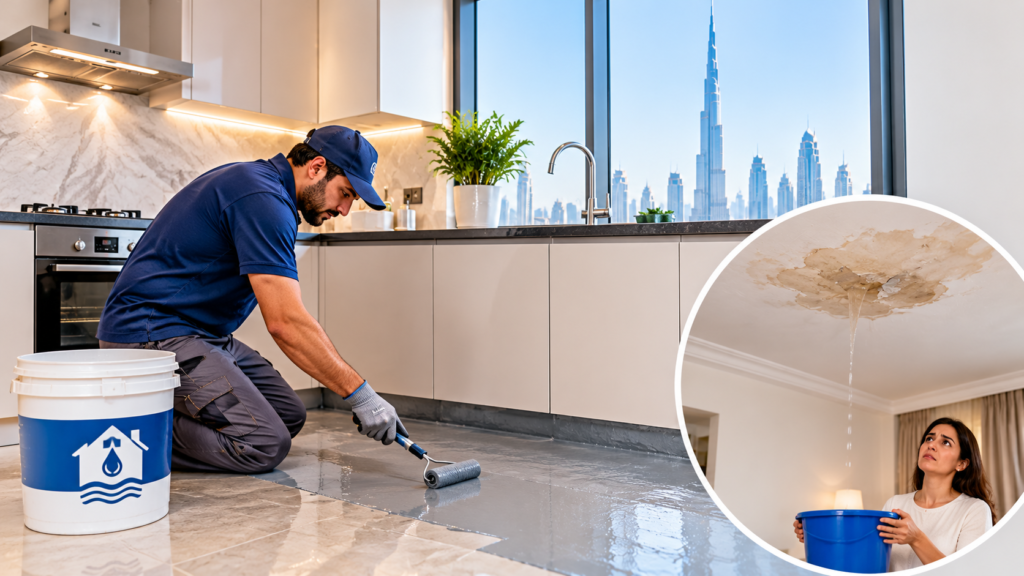
Discovering water dripping from your kitchen into the apartment below can quickly become a stressful situation. The downstairs occupant may notice a damp ceiling, peeling paint or active dripping, while the apartment above may have no obvious sign of a leak. In many cases, the source is hidden beneath kitchen tiles, inside a cabinet or around a plumbing connection. Professional kitchen waterproofing Dubai solutions can help prevent such issues by protecting vulnerable areas from water penetration and leakage.
Professional kitchen waterproofing Dubai services can help identify whether the problem comes from a failed waterproofing membrane, a leaking pipe, a damaged drain or an appliance connection. However, the first step should always be identifying the actual source of the water. The upstairs owner or tenant is not automatically responsible simply because the leak appears to come from their apartment.
This guide explains why kitchen floors leak into flats below, who may have to pay for the repairs, how professionals investigate the problem and which repair methods may be suitable. It also covers immediate steps to take, prevention and what to consider when choosing a waterproofing contractor in Dubai.
Why Is Water Leaking From the Kitchen Floor Into the Flat Below?
Water can travel through small openings in flooring, plumbing connections and construction joints before appearing on the ceiling or walls of the apartment underneath. The visible damp patch is not necessarily directly below the original leak.
The cause may be a plumbing fault, an appliance connection, failed waterproofing or a combination of problems.
Failed or damaged kitchen floor waterproofing
A waterproofing membrane is a protective layer installed beneath floor finishes to prevent water from entering the underlying structure. If the membrane was poorly installed, damaged during later work or deteriorated over time, water can pass through the floor assembly.
This may happen when water repeatedly collects around a sink, dishwasher, washing machine or floor drain. Once water reaches the substrate, it may travel through joints or cracks and eventually appear in the flat below.
Cracked or deteriorated grout and floor joints
Grout fills the spaces between floor tiles. Over time, it can crack, become loose or develop gaps because of movement, poor installation or wear.
Damaged grout may allow water to enter beneath the tiles, especially when the area is regularly exposed to water. However, cracked grout alone does not prove that the waterproofing membrane has failed. The underlying system and the source of the water must be checked.
Leaking water supply pipes
Water supply pipes carry water to kitchen taps, sinks, dishwashers and other fixtures. A loose connection, damaged pipe or failed fitting can cause continuous or intermittent leakage.
A concealed supply pipe may leak even when the kitchen floor looks dry. The water can travel along the pipe route or through the floor structure before becoming visible downstairs.
Damaged drainage pipes
Kitchen sinks discharge wastewater through drainage pipes. A cracked waste pipe, loose joint or damaged connection can allow water to escape whenever the sink is used.
If the downstairs ceiling becomes damp mainly after washing dishes or emptying the sink, the drainage system should be inspected.
Sink and kitchen cabinet plumbing leaks
Small leaks beneath kitchen sinks are easy to overlook because they may remain hidden inside cabinets. Water can collect around the cabinet base, penetrate floor joints and eventually affect the ceiling below.
Check for damp cabinet panels, swollen wood, mould, unpleasant smells and water around the pipe connections.
Dishwasher or washing machine connections
Dishwashers and washing machines use water supply and drainage connections. A damaged inlet hose, loose waste connection, faulty seal or overflowing appliance can release water onto the floor.
If leakage happens during or shortly after an appliance cycle, its connections and drainage arrangements should be investigated.
Water escaping around floor drains and fixtures
Floor drains and their surrounding seals can become damaged or poorly connected. Water may escape around the drain body rather than flowing properly into the drainage pipe.
This is particularly important where kitchen cleaning involves regular wet washing or where a floor drain is installed.
Poor sealing around kitchen fixtures
Gaps around pipes, floor penetrations, cabinets and other fixtures can create routes for water to enter concealed areas. Failed silicone sealant may contribute to localised water penetration, but applying new sealant without checking the underlying condition may only hide the symptom.
Cracks in the floor or surrounding construction
Cracks in screed, tiles or surrounding construction may allow water to travel below the visible surface. Some cracks are cosmetic, while others may indicate movement or a more significant defect.
A professional inspection is needed to determine whether the crack is related to the leak and whether further investigation is required.
Who Is Responsible for Paying for Kitchen Water Leakage in Dubai?

This is often the biggest concern for apartment owners, tenants and landlords. The answer depends on the source of the water, the condition of the property, the tenancy agreement, maintenance obligations and whether the affected installation is part of the individual apartment or a shared building system.
The upstairs apartment is not automatically responsible for every leak that appears on the ceiling below. The inspection findings are important evidence when deciding who should arrange and pay for the work.
When may the upstairs apartment owner be responsible?
The upstairs owner may need to arrange repairs when the leak originates from a defective installation or maintenance issue within their property and falls under their ownership or maintenance obligations.
Examples may include:
- A failed kitchen waterproofing system within the apartment.
- A damaged private water supply or drainage pipe.
- Poorly maintained plumbing connections.
- Defects caused by renovation work carried out within the unit.
- Damage resulting from an alteration made by the owner or their contractor.
The actual responsibility depends on the property’s documents, applicable rules and evidence establishing the cause.
When may the upstairs tenant be responsible?
A tenant may be responsible where the damage is linked to their actions, negligence or a maintenance obligation agreed under the tenancy contract.
For example, an appliance hose may be damaged through misuse, or a leak may continue after the tenant becomes aware of it and fails to report it.
However, a tenant should not automatically be charged for a concealed pipe defect, an ageing waterproofing membrane or a building-related issue without evidence. The tenancy agreement and relevant legal obligations should be reviewed.
When may the landlord be responsible?
Dubai’s tenancy framework provides that, unless the parties agree otherwise, landlords are responsible for maintenance and repairs to defects or damage that affect the tenant’s intended use of the property.
The distinction between essential and non-essential maintenance, the tenancy agreement and the cause of the defect all matter. Dubai Land Department guidance also explains the distinction between required maintenance and non-essential maintenance.
A tenant should notify the landlord or property manager promptly and retain written records of the complaint and inspection findings.
When may building management be responsible?
Some leaks originate from shared building services or common parts rather than an individual apartment.
Possible examples include:
- A shared water supply or drainage installation.
- A common pipe shaft or service riser.
- A building-level drainage defect.
- A structural or common-area defect.
- A shared installation maintained by the building’s management entity.
Dubai’s jointly owned property framework identifies common parts and provides for their management, maintenance and repair. Whether a particular pipe, slab or installation is a common part depends on the building’s approved plans and management documents.
Building management should therefore be notified when a leak may involve shared services or building components.
What about the downstairs apartment owner?
The downstairs owner may be responsible for repairs to their own internal finishes in some circumstances, but that does not automatically mean they must bear the cost of damage caused by another party’s leak.
The source of the water, insurance arrangements, property obligations and any applicable claims process should be considered before deciding who pays.
How should a payment dispute be handled?
Before agreeing that one party must pay, arrange a documented inspection that identifies:
- The suspected source of the water.
- Whether the leak is from plumbing, drainage, an appliance or waterproofing.
- Whether the affected installation is private or shared.
- The damage found in both apartments.
- The recommended repair and any further testing required.
Keep photographs, videos, inspection reports, quotations and written communications. If the parties disagree about responsibility, review the tenancy agreement and building documents and seek appropriate legal or property-dispute guidance.
This section is general information, not formal legal advice or a decision about liability in an individual case.
Warning Signs of Kitchen Floor Leakage
Kitchen leakage may remain hidden for days or weeks before it becomes visible in the apartment below.
Look out for these warning signs:
- Water stains on the downstairs ceiling: Yellow, brown or dark patches may indicate moisture entering from above.
- Peeling paint or bubbling plaster: Moisture can weaken the bond between paint and the ceiling surface.
- Damp kitchen flooring: Persistent dampness around cabinets, sinks or appliances may indicate a hidden leak.
- Musty smells: A damp or mouldy smell may develop in enclosed cabinets or concealed spaces.
- Loose or lifting floor tiles: Moisture beneath tiles may contribute to deterioration or loss of adhesion.
- Dark grout lines: Persistent discolouration may indicate moisture, although it can also result from dirt or cleaning products.
- Water collecting near cabinets: Water around the cabinet base may come from sink plumbing, appliances or floor leakage.
- Repeated dampness after using the sink: This can point towards a supply or drainage connection.
- Ceiling dripping downstairs: Active dripping requires prompt attention to limit damage.
Do not wait for visible water to become severe. Early kitchen leak detection Dubai inspections can help identify the source before damage spreads to additional finishes or neighbouring areas.
How Professionals Identify the Source of a Kitchen Leak
A proper investigation should establish where the water originates before major repairs are recommended. Simply inspecting the downstairs ceiling is not enough because the visible damage may be some distance from the actual leak.
A professional kitchen floor leak detection Dubai inspection may involve several methods.
Visual inspection of the kitchen
The technician checks the floor, grout, wall junctions, cabinets, sink area, appliances and visible pipe connections.
The downstairs ceiling and walls should also be inspected to document the affected areas.
Checking sink and appliance connections
The sink trap, waste pipe, tap connections, dishwasher hose and washing machine connections are checked for signs of leakage.
Where appropriate, individual fixtures or appliances can be tested to see whether water escapes during operation.
Inspecting water supply and drainage pipes
Supply pipes may require pressure testing or other suitable checks. Drainage pipes may be inspected for leakage at joints, connections or concealed sections.
The correct test depends on the pipe type and suspected failure.
Moisture meter testing
A moisture meter measures moisture levels in accessible materials such as walls, ceilings and flooring. It can help map damp areas and compare readings across affected and unaffected sections.
It does not independently identify every leak source, but it provides useful evidence for further investigation.
Thermal imaging where suitable
Thermal imaging cameras identify temperature differences on surfaces. These patterns may help locate suspicious damp areas or concealed water paths.
However, a thermal image does not automatically prove that a pipe is leaking or that a waterproofing membrane has failed. Readings must be interpreted alongside other inspection findings.
Controlled water or flood testing
Where appropriate and safe, a technician may conduct a controlled water test on a specific area. The affected ceiling or space below is monitored to check whether moisture appears.
Testing should be planned carefully to avoid causing additional damage. The method and test duration depend on the area, construction and suspected failure.
Identifying plumbing versus waterproofing failure
The final assessment should distinguish between:
- A leaking pressurised water supply pipe.
- A damaged wastewater or drainage pipe.
- An appliance or fixture connection leak.
- Water escaping through floor joints or penetrations.
- A failed waterproofing membrane.
- A possible shared building-service defect.
This distinction determines the appropriate repair. A plumbing leak needs plumbing work; a failed waterproofing membrane may require opening the floor and restoring the waterproofing system.
How Kitchen Waterproofing Dubai Solutions Fix the Problem
The repair should match the cause. Applying sealant to a visible damp patch or repainting the downstairs ceiling does not stop water entering from above.
Professional kitchen waterproofing Dubai work may involve the following stages, depending on inspection findings.
Repairing leaking pipes and connections
If the problem comes from a water supply pipe, drainage pipe, sink connection or appliance hose, the defective component should be repaired or replaced.
The system should then be checked to confirm that the connection is no longer leaking.
Removing damaged grout and resealing joints
Where the investigation identifies deteriorated grout or localised joint failure, damaged material may be removed and replaced with a suitable product.
This can be appropriate for certain localised problems, but it is not a substitute for membrane replacement if the waterproofing layer has failed.
Replacing failed silicone seals
Silicone around fixtures, cabinets and selected junctions can deteriorate over time. The old material may need to be removed, the surface prepared and a suitable replacement applied.
New silicone should not be used to conceal a concealed plumbing or membrane defect.
Removing affected flooring where necessary
If the waterproofing membrane beneath the tiles has failed, the affected tiles and sometimes the screed may need to be removed to access the underlying surface.
The amount of removal should be based on the inspection and the extent of the failure.
Preparing and repairing the substrate
The exposed surface must be sound, clean and suitable for the selected waterproofing system. Cracks, damaged screed, weak areas and other defects should be addressed according to the system requirements.
Applying a suitable waterproofing membrane
The selected membrane should be appropriate for an internal kitchen floor and compatible with the substrate and finishing materials.
Correct application includes attention to:
- Surface preparation and primer requirements.
- Floor-wall junctions.
- Pipe penetrations.
- Drain details, where present.
- Membrane coverage and specified thickness.
- Curing time and protection.
Reinstalling tiles and finishing materials
Once the waterproofing work has been completed and checked, the protective layers, screed where required, adhesive, tiles and grout can be reinstated.
Conducting appropriate testing
Where the system and site conditions allow, testing should be carried out before the finished floor is handed over. The downstairs ceiling or affected area should also be monitored as appropriate.
The repair should be documented so the owner or property manager can understand what was done and which areas were tested.
Does the Entire Kitchen Floor Need to Be Removed?
No. Every kitchen leak does not require complete floor removal.
The correct approach depends on the source, the extent of damage and the condition of the existing waterproofing system.
When localised repairs may be sufficient
A smaller repair may be appropriate when the problem is limited to:
- A leaking sink connection.
- A damaged appliance hose.
- A loose drainage joint.
- A localised sealant failure.
- A small area of deteriorated grout where the membrane remains sound.
In these situations, the repair may not require disturbing the entire kitchen floor.
When tile removal may be necessary
Tiles may need to be lifted when:
- Water is entering beneath the finished floor.
- The waterproofing membrane is damaged.
- The substrate is wet or deteriorated.
- The leak cannot be properly accessed from an exposed plumbing connection.
- Testing indicates a wider failure beneath the tiled surface.
When the waterproofing membrane may need replacement
If the membrane has failed across a larger area or its condition cannot provide reliable protection, a broader waterproofing repair may be recommended.
The affected floor area may need to be stripped back, prepared and waterproofed again before the tiles are reinstated.
The inspection report should explain why the proposed removal is necessary. Avoid agreeing to full floor replacement without understanding the evidence and the scope of work.
How Much Does Kitchen Waterproofing and Leak Repair Cost in Dubai?
There is no reliable single price for every kitchen leak. The total cost depends on the source of the water and how much of the floor or plumbing system needs repair.
For this reason, a fixed AED estimate without inspecting the property could be misleading.
The main cost factors include:
- Affected area: A small repair around a pipe connection differs from waterproofing an entire kitchen floor.
- Leak source: Plumbing repairs, drainage repairs and membrane replacement require different materials and labour.
- Tile removal: Breaking out and disposing of tiles can increase the work involved.
- Substrate condition: Damaged screed or concrete may need preparation or repair.
- Waterproofing system: Material type, application requirements and detailing affect the quotation.
- Access requirements: Apartment access, working hours, building approvals and material movement may influence the programme.
- Downstairs damage: Ceiling repairs, plastering, painting and other reinstatement work may be additional.
- Testing and finishing: Testing, tile replacement, grouting and final cleaning should be clarified.
A proper quotation should state the suspected cause, repair method, measured area, materials, labour, exclusions, testing arrangements and any warranty offered.
The Waterproofing Dubai website explains that pricing depends on the area, specified system, tile or screed removal and access requirements. It offers a site inspection and an itemised quotation rather than publishing one fixed price for every job.
What Should You Do Immediately When Your Kitchen Leaks Into the Flat Below?
If water is appearing on the ceiling of the apartment underneath, take practical steps to limit further damage.
- Stop using the suspected source: Stop the sink, dishwasher or washing machine if its use appears connected to the leak.
- Turn off the relevant water supply: If necessary and safe, isolate the affected supply. Do not attempt electrical or plumbing work beyond your ability.
- Prioritise electrical safety: If water is near sockets, lights, appliances or electrical installations, keep away from the affected area and contact building management or a qualified electrician. Do not touch wet electrical equipment.
- Document the damage: Take photographs and videos of the kitchen, cabinets, floor and downstairs ceiling.
- Inform the downstairs occupant: Communicate promptly and avoid making assumptions about who is responsible.
- Notify the landlord or property manager: Tenants should report the problem in writing as soon as possible.
- Contact building management: This is especially important if shared pipes, service shafts or common building components may be involved.
- Arrange a professional inspection: Ask for the source to be identified before agreeing to major repairs.
- Keep records: Save inspection reports, photographs, repair quotations and written communications.
- Agree on the repair scope: Where possible, confirm the recommended work and payment arrangements before work begins.
If water is actively spreading, do not delay reporting the incident while waiting to collect every document.
How to Prevent Future Kitchen Floor Leakage
Preventive maintenance can reduce the likelihood of recurring water damage.
Install suitable waterproofing during renovation
Kitchen floors should have a waterproofing system appropriate for the design and expected exposure to water. Pay attention to floor-wall junctions, pipe penetrations and drain details.
Check plumbing connections regularly
Inspect the sink trap, flexible hoses, taps, dishwasher and washing machine connections for signs of corrosion, moisture or loose fittings.
Maintain grout and sealant
Repair damaged grout and deteriorated sealant where necessary. These materials help protect joints, although they do not replace the waterproofing membrane beneath the floor.
Address leaks early
Do not ignore small damp patches, swollen cabinet panels or repeated water around appliances. A minor plumbing leak can become a larger repair if it continues unnoticed.
Use suitable waterproofing materials
The membrane, primer, sealants and associated materials should be compatible with the substrate and installed according to the manufacturer’s instructions.
Use experienced professionals
A contractor should be able to explain the difference between plumbing leakage and waterproofing failure, document the inspection and recommend a repair based on evidence.
Check older kitchen flooring
During a kitchen renovation or property inspection, review the condition of the floor, plumbing connections, joints and accessible waterproofing details.
Kitchen Waterproofing Across Dubai Communities
Kitchen leakage can affect apartments and residential properties throughout Dubai. However, the property layout, building age, plumbing arrangement, floor construction and maintenance requirements may differ from one development to another.
For example, high-rise apartments may have shared service risers and building-specific access procedures, while villas and townhouses may have different plumbing layouts and maintenance arrangements.
Professional kitchen waterproofing Dubai inspections may be relevant in:
- Palm Jumeirah: Apartment and residential property layouts may require coordination with building management.
- Dubai Marina: High-rise buildings can have specific access, service-riser and maintenance procedures.
- Downtown Dubai: Confirm building rules and access arrangements before opening floors or concealed service areas.
- Dubai Hills: Property type and installation details should guide the inspection and repair scope.
- Jumeirah: Older and renovated properties may have different plumbing and floor construction details.
- Jumeirah Park and Jumeirah Islands: Villa layouts and kitchen alterations should be considered during leak investigation.
- Meadows and Springs: Existing property condition and previous renovation work may affect the repair approach.
- Arabian Ranches: Inspect the actual plumbing and floor system rather than assuming every property has the same construction.
- Emirates Hills: Larger residential layouts may involve additional coordination where several areas are affected.
- Business Bay: Apartment and mixed-use building procedures may influence access and repair scheduling.
- Al Barsha: Property age, alterations and plumbing condition should be checked individually.
- Meydan: Confirm the property’s specifications and relevant management requirements.
- JVC and JVT: Apartment and townhouse layouts may have different drainage and access arrangements.
- Silicon Oasis: Building type and maintenance responsibilities should be established before work begins.
- Motor City: The inspection should consider the actual floor construction, plumbing route and history of previous repairs.
The location alone does not establish the cause of leakage or determine who pays. Each property needs an individual inspection.
How to Choose a Kitchen Waterproofing Company in Dubai
Choosing the right contractor is important because an incorrect repair may allow water to continue entering the floor and damaging the apartment below.
Before appointing a company, check the following.
Experience with kitchen and apartment leakage
Look for experience with wet areas, concealed plumbing, floor membranes and leakage between apartments.
Professional inspection methods
Ask how the contractor will investigate the leak. Moisture meters, thermal imaging and controlled testing may help, depending on the suspected source.
Ability to distinguish plumbing and waterproofing faults
The company should explain whether the problem is a supply pipe, drainage connection, appliance, floor joint or membrane failure.
Clear repair recommendations
The inspection should result in a clear explanation of the findings and the work required. Ask why tile removal or membrane replacement is necessary if recommended.
Suitable waterproofing materials
Check that the proposed membrane and associated materials are appropriate for the application and compatible with the substrate.
Transparent quotations
A quotation should explain the work area, materials, labour, exclusions, testing and finishing responsibilities. Clarify whether downstairs ceiling repairs are included or separate.
Testing and quality checks
Ask how the completed work will be checked before the floor is reinstated. Keep the inspection and testing records.
Written warranty and after-service support
Confirm what the warranty covers, its duration, any exclusions and how to request support if a problem returns.
Waterproofing Dubai provides waterproofing and leakage diagnosis services for apartments, villas and commercial properties. Its website describes inspection methods including thermal imaging and moisture testing, followed by a written report and itemised quotation.
You can explore its waterproofing services in Dubai or contact the team to arrange a site inspection.
Frequently Asked Questions About Kitchen Waterproofing Dubai
Who pays if water leaks from my kitchen into the flat below in Dubai?
Payment responsibility depends on the actual cause, property ownership, tenancy agreement and maintenance obligations. The upstairs owner or tenant is not automatically responsible. A professional inspection should identify the source before liability is decided.
Can a kitchen floor leak damage the apartment downstairs?
Yes. Water can travel through floor joints, cracks, plumbing openings or a failed waterproofing system and reach the ceiling or walls below. It may cause damp patches, peeling paint, damaged plaster and other moisture-related problems.
What are the most common causes of kitchen floor leakage?
Common causes include leaking water supply pipes, damaged drainage pipes, sink connections, appliance hoses, failed waterproofing membranes, deteriorated grout and water escaping around floor drains or fixtures.
How can I tell if my kitchen waterproofing has failed?
Possible warning signs include recurring dampness, water appearing downstairs, loose tiles and moisture around floor-wall junctions. However, these signs do not prove membrane failure. Plumbing and appliance connections should also be checked.
Does a kitchen leak always mean the waterproofing membrane is damaged?
No. A leaking sink pipe, appliance hose or drainage connection can cause water damage without a failed membrane. The source must be identified before deciding whether waterproofing repairs are needed.
Can kitchen floor waterproofing be repaired without removing all the tiles?
Sometimes. If the leak comes from an accessible pipe or a localised joint, a targeted repair may be sufficient. If the membrane beneath the tiles has failed, tile removal may be necessary to restore the system properly.
How do professionals detect hidden kitchen water leaks?
They may use visual inspection, plumbing checks, moisture meters, thermal imaging and controlled water testing. These methods help narrow down the source, but the findings must be interpreted together.
How much does kitchen waterproofing cost in Dubai?
The price depends on the affected area, leak source, tile removal, substrate repairs, waterproofing materials, access and finishing work. A site inspection and itemised AED quotation are the best way to establish the actual cost.
How long does kitchen waterproofing repair take?
The duration depends on the repair scope, material curing requirements, tile removal, plumbing work and building access. A small connection repair may be quicker than removing flooring and reinstating a complete waterproofing system. Ask the contractor for a programme after inspection.
How can I prevent water from leaking through my kitchen floor?
Maintain plumbing and appliance connections, repair damaged joints, use suitable waterproofing during renovation and investigate dampness early. Professional installation and appropriate testing can reduce the risk of future leakage.
Conclusion: Identify the Leak Before Paying for Repairs
A kitchen floor leaking into the flat below can involve plumbing faults, appliance connections, damaged drainage pipes or failed waterproofing. The visible ceiling stain does not necessarily reveal the original source.
For apartment owners, landlords and tenants in Dubai, the most important first step is a proper inspection. Payment responsibility depends on the cause of the leak, the relevant ownership and maintenance obligations, the tenancy agreement and applicable building requirements. It should not be assumed simply from which apartment the water appears to come from.
Professional kitchen waterproofing Dubai services can help identify the source, recommend an appropriate repair and reduce the risk of recurring water damage. Whether the problem requires a plumbing repair, localised sealing or replacement of a waterproofing membrane, the solution should be based on inspection findings rather than guesswork.
If you have noticed damp flooring, leaking kitchen pipes or water appearing on the ceiling of the apartment below, contact Waterproofing Dubai to discuss a professional leak inspection and suitable repair options.

Keep reading
Mesh-Reinforced vs Standard Liquid Membrane: When Is Mesh Worth It? (2027 Blog)
Mesh is often used in Waterproofing in Dubai. It can be applied to corners, round pipework and other features in order to…
Read article Mesh-Reinforced vs Standard Liquid Membrane: When Is Mesh Worth It? (2027 Blog)
Plumbing Services in Palm Jumeirah a LeakFree Efficient Home
Maintaining a well-functioning plumbing system is crucial for the comfort and efficiency of your home. At Austenite Technical Services LLC, we offer…
Read article Plumbing Services in Palm Jumeirah a LeakFree Efficient Home
Best Handyman Services in Palm Jumeirah Dubai 056 378 7002
At Austenite Technical Services LLC, we understand that maintaining a home or office can be a daunting task, which is why we…
Read article Best Handyman Services in Palm Jumeirah Dubai 056 378 7002