
Leak Detection in Dubai
Find the leak before you break anything. Thermal imaging and moisture mapping trace where water is entering, so the repair is targeted — and you get a written report with the evidence.
- Free site inspection
- Written quotation
- Warranty-backed work

- Thermal scan of ceilings, walls and floors
- Moisture readings to map the wet area
- Roof, balcony and wet-area checks
- Plumbing, AC drain and tank checks
- Written report with photos and causes
Thermal imaging
Hidden moisture made visible
Moisture mapping
Readings confirm the spread
Written report
Photos, locations and causes
Non-destructive
Targeted opening-up only
The stain is rarely where the leak is.
Water travels along slabs, pipes and beams before it shows up as a stain. Without diagnosis, repairs are guesswork — tiles broken in the wrong place, or the same stain back after the next rain.
A thermal camera shows temperature differences caused by moisture behind finishes. Moisture meters confirm and map the readings. Together with checks on roofs, wet areas, plumbing and AC drains, they narrow the source down before anything is opened.
- A stain keeps returning after repainting
- Water appears only after rain — or only after showers
- Your neighbour reports water from your unit
- Damp walls with no obvious source
- Before buying or renting a property
- Before your developer warranty expires
Every common source of water damage.
One visit, one report, one clear answer.
Roof leaks
Membranes, drains, upstands and penetrations.
Bathroom leaks
Trays, wastes, grout and concealed pipes.
Balcony leaks
Thresholds, falls and drains.
Plumbing leaks
Supply and waste lines behind finishes.
AC condensate leaks
Drain lines and trays above ceilings.
Damp & seepage
Rising damp, groundwater and condensation.
How we carry out leak detection.
Every stage is photographed for your report, and nothing is covered until it has passed a water test.
Book the visit
Tell us where the stain is and when it appears.
Thermal scan
Ceilings, walls and floors scanned for anomalies.
Moisture mapping
Readings taken to map the wet area.
Source checks
Roof, wet areas, plumbing and AC drains tested.
Report & plan
Findings, causes and recommended repair with a quote.
What to expect from professional leak detection in Dubai
A leak investigation is only as useful as the conclusions you can act on. Knowing what the tools can and cannot show, how to prepare your property and how to read the final report will help you get a clear answer faster. This guide also covers the practical side of leaks in apartments and villa communities: involving neighbours, building management, landlords and insurers so the repair actually goes ahead.
What a thermal camera can and cannot show
A thermal camera does not see water. It shows surface temperature, and wet materials usually appear cooler or warmer than their surroundings because water evaporates and holds heat differently. That makes hidden moisture visible as a pattern, often far wider than the stain you can see. The pattern’s shape and direction give strong clues about where the water is coming from.
The same image can be misleading on its own. Cold air from AC vents, gaps in insulation, shaded areas, hot pipes and reflective surfaces such as glossy tiles or metal can all create patterns that look like moisture. That is why every suspicious area is checked with moisture meters and, where needed, targeted tests such as flood testing a balcony or running a specific shower. Thermal imaging points the way; confirmation decides the answer.
How to prepare for a leak inspection visit
The more you can tell the inspector, the more focused the visit becomes. Note when the problem appears: after rain, after showers upstairs, when the AC runs for long periods, or at random. Take dated photos of stains as they grow or fade. Avoid repainting or treating the area before the visit, because fresh paint can hide the pattern the inspection needs to read.
Access matters just as much. If the likely source is the roof, the unit above or a shared shaft, ask building management or the neighbour in advance whether the inspector can enter. Clear furniture away from affected walls and ceilings, make sure ceiling access panels can be opened, and keep water and AC running normally so conditions match those that cause the leak.
- When the leak appears and how often
- Dated photos of the stain over time
- No repainting or patching before the visit
- Access arranged to roof, shafts or the unit above
- Ceiling hatches and affected walls cleared
How to read a leak detection report
Our written report sets out what was found, where and why. Expect photos and thermal images of each affected area, moisture readings marked against locations, the likely cause and recommended repairs. Look first at how the findings link together: does the moisture pattern lead logically from the suspected source to the visible damage? A good report explains that path in plain language rather than listing readings without interpretation.
Pay attention to the confidence of each finding. Some causes are confirmed directly, for example a waste joint leaking during a test. Others are described as likely, because confirming them would require opening a finish or accessing another property. In those cases the report should say what further step would confirm the cause, so you can decide on the next move with full information.
- Photos and thermal images of each area
- Moisture readings marked on locations
- Confirmed causes kept separate from likely ones
- Recommended repairs and any further tests
Why some leaks are hard to pin down
Intermittent leaks are the most difficult. A roof that only leaks during heavy rain cannot always be reproduced on a dry day, and a balcony that leaks only when wind drives rain against a door may look perfectly dry during the visit. In these cases the inspection relies on simulated tests, such as controlled water testing, and on the evidence you have recorded during previous events.
Water can also travel a long way before it appears. In towers it may follow slabs, service shafts and pipe sleeves well away from the source, and in villas it can run along beams or inside wall cavities. Old leaks that have dried out leave staining but little moisture to measure. Leak detection narrows down the source methodically, but honest reports sometimes recommend a second visit under the conditions that trigger the leak.
Neighbours, building management, landlords and insurers
Many leaks in apartments come from a neighbouring unit or a common area, which makes the repair a shared matter. A clear, neutral report with photos and readings helps conversations stay factual rather than personal. Share it with the owner or tenant of the source unit and with building management, who are usually responsible for roofs, shafts and common pipework. In villa communities, the master community or developer may handle shared elements.
For rented property, the landlord or property manager normally needs to approve and arrange repairs, so send them the report promptly. If you intend to make an insurance claim, check your policy first and keep every record: photos, the report, correspondence and receipts. Insurers and building management often have their own procedures, and evidence gathered early makes those processes smoother.
Questions to ask before booking an inspection
Ask what methods will be used and whether thermal findings will be confirmed with moisture readings or targeted tests. Find out whether you will receive a written report with photos, and whether it will separate confirmed causes from probable ones. Check whether roof, balcony, plumbing and AC drain checks are included, and what happens if access to a neighbouring unit is needed.
It is also worth asking whether the company carrying out the inspection can quote for the repair and how that quote relates to the findings. We provide an itemised quotation based on the report, so each recommended repair can be traced back to the evidence. That link helps you avoid paying for work the inspection never showed was necessary. Good leak detection should make the repair smaller and more certain, not simply add another visit.
Rated 5.0 by the people whose homes we’ve worked on.

Every review is from a real client on our public Google Business profile.
Outstanding company — changed my 3 bathrooms completely in 4 weeks. Walls and floors redone, new sealing, bathtub replaced with a rain shower, everything while I was away. Very professional and good value.
Excellent response time. Very professional and cost effective. Not in the habit of overcharging.
Highly recommended for any maintenance issues or any work that requires a contractor. These guys know their stuff.
Did an excellent job on my room ceiling. The finish is flawless and the attention to detail is commendable. Highly satisfied with their service.
Leak Detection — your questions answered.
Straight answers. If yours isn’t here, send it on WhatsApp.
Send two or three photos of the stain or area. We’ll tell you what it probably is and whether it needs a visit.
Can thermal imaging see water through walls?
It detects temperature differences that moisture causes. Combined with moisture meter readings, it reliably maps where water is — then targeted checks confirm the source.
Will you need to break anything?
The inspection itself is non-destructive. If opening-up is needed to confirm or repair, it is small and targeted.
Do I get a report?
Yes — a written report with photos, thermal images, locations, likely causes and recommendations.
Can you tell if the leak is from my neighbour?
Often, yes. Mapping the moisture pattern usually shows which direction the water is coming from.
Is the inspection free?
The site visit for a waterproofing quotation is free. Ask us about a full written leak-investigation report when you book.
Should I turn off the water before a leak inspection?
Usually not. Keeping water, showers and AC running as normal helps reproduce the conditions that cause the leak, which makes moisture easier to trace. If water is actively causing damage, isolate the supply to protect the property and tell us when you book, so we can plan the visit.
Can a leak inspection be done right after rain?
Yes, and it can be very helpful. Inspecting soon after rain, while materials are still wet, often makes roof and balcony leak paths clearer than on a dry day. If you notice water during or after rain, take photos and contact us promptly so the evidence is still fresh.
Will the report say who is responsible for the repair?
The report records where water is coming from, the evidence and the likely cause. Deciding legal or financial responsibility between owners, tenants, building management or insurers is a separate matter, but a clear, factual report gives everyone the same information to base that decision on.
What should I do while I wait for the inspection?
Note when the stain appears — after rain, after showers or when the AC runs — and take dated photos. If water is dripping, protect belongings and switch off any lights or sockets near the wet area. Avoid repainting or sealing anything, because it can hide the evidence the inspection relies on.
Related services

Flat, sloped and podium roofs — torch-on bitumen under screed, or UV-resistant liquid membranes on exposed roofs with AC plinths, solar frames and pipe penetrations detailed properly.

Shower trays, floor wastes and wall junctions sealed with a continuous wet-area membrane — so water stays in the bathroom, not the ceiling below.
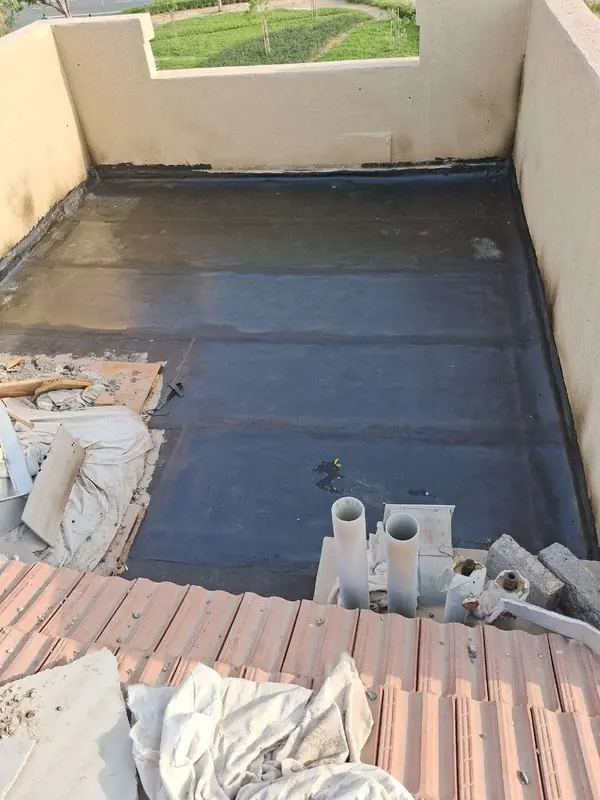
Membrane under tiles with correct falls to drains and turned-up edges at doors and walls.
Fix the leak once.
Properly.
Tell us what you’re seeing. We’ll find the cause, show you the evidence and quote the right fix.