
Weatherproof Roofing Systems in the UAE
Sandwich-panel, metal sheet, tile and flat roofs sealed and coated against rain, heat and UV — with reflective finishes that help keep the rooms below cooler.
- Free site inspection
- Written quotation
- Warranty-backed work


5.0 ★★★★★
205 Google reviews
All roof types
Panel, metal, tile and concrete
Reflective finishes
Help reduce heat gain
Fixings & joints sealed
Where metal roofs leak
UAE-wide
Homes, warehouses and offices
Weather gets in where roofs move.
Metal and sandwich-panel roofs expand and contract daily. Fixings loosen, side laps open and sealants crack — and the first heavy rain finds every gap. Tile roofs fail at ridges, valleys and flashings; flat roofs at joints and drains.
We seal the specific failure points, then apply a coating system suited to the roof type — often a reflective finish that also reduces heat gain into the building.
- Leaks at fixings or panel joints after rain
- Rust on metal sheets or fasteners
- Cracked or slipped roof tiles
- Rooms below getting unusually hot
- Peeling or chalky old coating
- Water around skylights or roof equipment
From villas to warehouses.
Each roof type has its own weak points — and its own fix.
Flat concrete roofs
Membranes and reflective coatings.
Sandwich-panel roofs
Joints, fixings and laps sealed and coated.
Clay & tile roofs
Ridges, valleys and flashings.
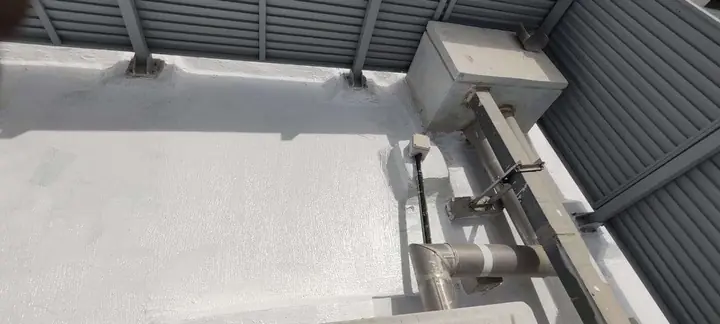
Roofs with solar & AC
Detailing around frames and plinths.
Metal & steel sheet roofs
Rust treatment and elastomeric coatings.
Combined systems
Insulation plus waterproofing.
How we carry out weatherproof roofing.
Every stage is photographed for your report, and nothing is covered until it has passed a water test.
Survey the roof
Fixings, laps, flashings, drains and coating condition.
Repair & seal
Fasteners replaced, laps and joints sealed, rust treated.
Prepare & prime
Clean and prime to suit metal, tile or concrete.
Coat
Weatherproof and reflective coatings in specified coats.
Inspect & hand over
Final check and written warranty.
A guide to weatherproof roofing for UAE homes, warehouses and offices
Roofs in the UAE face a combination few climates deliver at once: intense sun and UV, large temperature swings, sand-laden winds and short bursts of very heavy rain. Each roof type responds differently to that stress. This guide explains why metal, panel and tile roofs leak, how coating options compare, what shapes the scope of weatherproof roofing work, and how owners and facility managers can keep a roof watertight between major repairs.
Why metal and panel roofs leak in a hot climate
Metal expands as it heats and contracts as it cools. On a large warehouse or a villa car-park canopy, that movement repeats every day and works on every screw, side lap and ridge cap. Over time the rubber washers under fixings harden in the sun, holes elongate and sealant in the laps loses its grip. The roof can look intact from the ground while dozens of small openings wait for the next downpour.
Sandwich panels add another weak point: the joints between panels and the cut ends at gutters and eaves. If the panel edges are not sealed, wind-driven rain can enter the core, and moisture trapped inside can corrode the facing from within. Condensation forming on the underside of cold metal, especially in air-conditioned buildings, is sometimes mistaken for a leak and needs a different solution.
Comparing coating options for UAE roofs
Most roof coatings used here are elastomeric, meaning they stretch and recover as the roof moves. Acrylic coatings are water-based, easy to apply and often supplied in bright reflective colours. Polyurethane and hybrid coatings are tougher and better suited to roofs with foot traffic or areas where water may sit after rain. Silicone-based coatings resist UV and ponding well but can limit which products bond to them later.
The right choice depends on the substrate, how much movement there is, whether water ponds, and how the roof will be used. A metal roof needs a rust-inhibiting primer compatible with the top coat. A concrete roof may need a membrane before any reflective finish. The manufacturer’s data sheet sets the primer, number of coats and film thickness for each system.
- Acrylic: reflective, water-based, suits sloped roofs
- Polyurethane or hybrid: tougher, handles foot traffic
- Silicone-based: strong UV resistance, limits future recoating options
- Primers matched to metal, concrete or tile
What affects the scope and cost of weatherproof roofing?
Roof area matters, but condition usually matters more. A roof with a few failed laps needs targeted sealing and a coating; a roof with widespread rust, perforated sheets or damaged panels may need sections replaced before any coating can work. The number of fixings, skylights, ventilators, solar frames and AC units also changes the amount of detailing and hand work involved.
Access and safety planning are significant on industrial buildings. Fragile roof sheets and skylights, roof height and the need for edge protection or lifting equipment all shape the method. Working hours may be limited by tenants, operations below or extreme midday heat. We survey the roof first and provide an itemised quotation, so repairs, preparation and coatings are shown separately.
- Extent of rust, damaged sheets or failed panels
- Number of fixings, skylights and roof equipment
- Roof height, fragile areas and safety measures
- Working hours and phasing around building use
Preparing a roof before coating
Coatings fail most often because of poor preparation rather than poor products. The roof is cleaned of dust, sand, bird droppings and loose old coating, usually by washing and scraping. Rust is removed back to sound metal as far as practical and treated with a suitable primer. Loose or missing fasteners are replaced, and open laps, ridge joints and flashings are sealed and reinforced before the main coats go on.
The roof must be dry and free of dew when coating starts, which in humid months often means waiting until the morning moisture has gone. Surfaces that are too hot can make coatings dry too fast and form bubbles. Weather is watched carefully during the rare rainy spells, because fresh coatings need time to cure before they can shed water. Wind matters too, since blowing sand landing on a wet coat spoils the finish and weakens the surface.
Tile and flat roofs: different weak points
Pitched tile roofs on villas rarely leak through the tiles themselves. Water usually finds its way in at ridges, hips and valleys, around chimneys and parapet walls, or through cracked and slipped tiles disturbed during maintenance. The underlay beneath the tiles is the real last line of defence, so when it has degraded, re-bedding ridges alone may not stop the leak.
Flat concrete roofs behave differently again. They depend on falls to move water to drains and on a continuous membrane beneath the finish. Sand blowing across UAE roofs readily blocks outlets, so water ponds against upstands during heavy rain. Good weatherproof roofing on a flat roof therefore combines sealing joints and drains with a membrane or reflective coating suited to the exposure.
Keeping a roof weatherproof between major repairs
A short routine inspection, ideally before the cooler months when rain is more likely, catches most problems early. Clear gutters, drains and valleys of sand and debris. Look for lifted sheets, missing or rusted fixings, cracked sealant, worn coating near walkways and damage around equipment that has been serviced. Inside, check ceilings and the underside of sheets for stains or rust spots after rain.
Limit foot traffic on coated and metal roofs, and ask AC, solar and telecom installers to report any new fixings so they can be sealed correctly. Small repairs carried out promptly are far less disruptive than waiting until stock, equipment or ceilings below are damaged. Keeping photos from each inspection helps you see gradual changes over time, and gives any contractor a clear history of the roof before they quote for future work.
Real photos from our jobs.


Rated 5.0 by the people whose homes we’ve worked on.
Every review is from a real client on our public Google Business profile.
Outstanding company — changed my 3 bathrooms completely in 4 weeks. Walls and floors redone, new sealing, bathtub replaced with a rain shower, everything while I was away. Very professional and good value.
Excellent response time. Very professional and cost effective. Not in the habit of overcharging.
Highly recommended for any maintenance issues or any work that requires a contractor. These guys know their stuff.
Did an excellent job on my room ceiling. The finish is flawless and the attention to detail is commendable. Highly satisfied with their service.
Weatherproof Roofing — your questions answered.
Straight answers. If yours isn’t here, send it on WhatsApp.
Send two or three photos of the stain or area. We’ll tell you what it probably is and whether it needs a visit.
Can a sandwich-panel roof be made watertight without replacing it?
Usually, yes. Leaks are mostly at fixings, side laps and ridge joints, which can be sealed and coated.
Do reflective roof coatings reduce heat?
Reflective finishes reflect more of the sun’s energy than dark surfaces, which helps reduce heat gain into the rooms below.
Do you work outside Dubai?
Yes, across the UAE — homes, warehouses, schools and offices.
What about rust on a metal roof?
Rust is treated and primed before the coating system is applied.
Can you work around solar panels?
Yes, we detail around frames and penetrations without disturbing the system where possible.
Will a roof coating stop condensation dripping inside a metal building?
Not on its own. Condensation forms when warm, humid air meets the cold underside of metal sheets, which is common in air-conditioned warehouses. It is usually addressed with insulation, ventilation or vapour control rather than an external coating. An inspection helps tell condensation apart from a genuine leak.
Can roof work be carried out while a warehouse stays in operation?
Usually, yes. Work can be phased so only part of the roof is open at a time, with protection for stock and equipment below where needed. Timings are agreed with the facility manager to suit operations, access routes and safety requirements, and to avoid the hottest parts of the day.
How often should a coated roof be inspected?
There is no single rule, but checking at least before the rainy season and after any major storm, roof equipment installation or maintenance work is sensible. Regular checks catch blocked drains, loose fixings and worn coating early, while repairs are still small, quick and simple to carry out.
Is it better to coat a metal roof or replace the sheets?
If the sheets are structurally sound and rust is limited to the surface, sealing the fixings and laps and applying a coating system is usually the practical choice. Sheets that are perforated, badly corroded or deformed should be replaced first. The inspection report separates the sheets that can be coated from any that need replacing, so you can decide with the facts.
Related services
Flat, sloped and podium roofs — torch-on bitumen under screed, or UV-resistant liquid membranes on exposed roofs with AC plinths, solar frames and pipe penetrations detailed properly.

Liquid-applied membranes for complex details, wet areas and exposed reflective roofs.

Roofs, terraces, wet areas, planters and foundations treated as one system — so water stopped on the roof doesn’t simply find the next weak joint.
Fix the leak once.
Properly.
Tell us what you’re seeing. We’ll find the cause, show you the evidence and quote the right fix.