
Balcony & Terrace Waterproofing in Dubai
Water coming in under the sliding door or staining the room below? We rebuild the protection under your tiles with correct falls, sealed drains and a proper threshold upturn.
- Free site inspection
- Written quotation
- Warranty-backed work


5.0 ★★★★★
205 Google reviews
Balconies & terraces
Apartments, villas and roof terraces
Correct falls
Water leaves the surface, fast
Door thresholds
Membrane turned up under the frame
Flood-tested
Before tiles go back down
The threshold is where most balconies fail.
A balcony has to shed rain, cleaning water and AC condensate away from the building. When the membrane stops short of the door frame, the falls run the wrong way, or the drain isn’t bonded into the membrane, water runs back under the door and into the room or the unit below.
We correct the cause: membrane continuous under the tiles, turned up the walls and under the threshold, sealed into the drain, and tested before re-tiling.

- Water inside after rain or balcony washing
- Damp skirting or swollen flooring by the door
- Stains on the ceiling of the unit below
- Ponding water on the balcony tiles
- Efflorescence or white salts on the tile joints
- Cracked or hollow-sounding tiles
Every outdoor floor over a room.
From small apartment balconies to large villa roof terraces.
Apartment balconies
Including access coordination with building management.
Villa terraces
Over living rooms, majlis or garages.
Roof terraces
Seating areas, pergolas and planters.
Planters on terraces
Root-resistant protection against walls.
Podium gardens
Landscaped decks over car parks.
Drain & threshold repairs
When the membrane is sound but details failed.
How we carry out balcony & terrace.
Every stage is photographed for your report, and nothing is covered until it has passed a water test.
Inspect & test
Moisture checks, falls and water test at the threshold and drain.
Remove tiles & screed
Back to the slab where the system has failed.
Correct the falls
New screed laid to fall towards the drain.
Membrane & upturns
Turned up walls and under the door threshold, bonded to the drain.
Flood test
Ponded and checked inside and below.
Re-tile & seal
Tiles, grout and sealant, then handover with warranty.
Balcony and terrace waterproofing in Dubai, explained
Balconies and terraces are exposed to everything Dubai’s weather can throw at them: direct sun, dust storms, humid nights, occasional heavy rain and the daily drip of AC condensate. This guide explains how balcony waterproofing in Dubai is specified for open and covered spaces, what shapes the scope, who is responsible in apartments, which mistakes let water back indoors, and how to keep the finished surface draining properly.
- How do you choose the right system for a balcony or terrace?
- What affects the cost of balcony and terrace waterproofing?
- Who is responsible in apartments: owner, landlord or developer?
- How long does balcony waterproofing take, and when is the best time?
- Which balcony mistakes let water back indoors?
- How do you keep a balcony or terrace draining well?
How do you choose the right system for a balcony or terrace?
Exposure is the starting point. A fully open terrace on a villa roof takes direct sun most of the day, while a recessed balcony in a tower may be shaded but catches wind-driven rain and dust. Where the surface will be tiled, the membrane sits protected under screed and tile; where a coating will stay exposed, it needs UV resistance and a finish that copes with foot traffic and furniture.
Use also changes the specification. Terraces with planters need root-resistant protection and their own drainage, while timber or composite decking on pedestals keeps the membrane accessible but makes drains harder to reach. Coastal balconies face salt air that corrodes railings and frame fixings, so the detailing around these is as important as the membrane itself. The system is chosen after inspection, not from a brochure.
What affects the cost of balcony and terrace waterproofing?
Size matters less than people expect. A small apartment balcony with a sliding door, a floor drain, glass balustrade fixings and an AC unit can involve as much detailing as a much larger open terrace. The amount of tile and screed to remove, whether the falls need rebuilding and whether the door frame must be adjusted to allow a proper upturn all shape the work.
In towers, building-management requirements such as permits, protection of common areas, lift booking and restricted working hours add planning time, and debris removal can be slower than at a villa. Tile matching, planters and any decking that must be lifted and reinstated are further variables. Each is set out separately in the quotation, so you can see why one balcony differs from another.
- Extent of tile and screed removal
- Whether the falls to the drain need rebuilding
- Door threshold height and frame adjustments
- Railings, planters, decking and AC units on the surface
- Building access rules and working hours
Who is responsible in apartments: owner, landlord or developer?
Responsibility for a leaking balcony depends on the cause and the building’s arrangements. In many towers the balcony is part of the owner’s unit, but drains, stacks and the external facade may fall under building management. For recently completed buildings, the developer’s defects liability period may cover membrane failures, so it is worth checking the handover date before arranging repairs yourself.
Tenants should report water ingress to the landlord in writing as soon as it appears, with photographs, because delays can make it harder to separate the original cause from later damage. A written inspection report that identifies whether the problem is the membrane, the drain, the threshold or a neighbouring source gives each party clear evidence, and usually shortens the discussion about who should arrange the repair.
How long does balcony waterproofing take, and when is the best time?
The programme depends on how much has to be removed and rebuilt. Stripping tiles and screed, correcting falls, applying the membrane in coats with curing between them, flood testing and re-tiling are sequential stages that cannot be overlapped. The flood test typically runs for 24 to 48 hours, and the screed and tile adhesive need time before the balcony is ready for furniture and regular use.
Work can be done all year, with external tasks planned for cooler parts of the day in summer and each product used within the manufacturer’s temperature limits. Many owners prefer to finish before the cooler months, when rain is more likely and outdoor living resumes. Your schedule, including when the sliding door must stay closed or protected, is set out with the quotation.
Which balcony mistakes let water back indoors?
The threshold is the critical detail, and the most common error is a finished tile level that sits at or above the internal floor, so any standing water flows inward. Others include drains set higher than the surrounding tiles, membranes that stop at the base of the wall rather than turning up behind the skirting tile, and balustrade posts fixed straight through the membrane without sealing.
AC condensate is a Dubai-specific culprit. Outdoor units placed on balconies often drip continuously onto one spot or discharge into a drain that was never connected properly, keeping a patch of tiles permanently wet. Brushing a clear sealer over the tiles in the hope of stopping a leak is another frequent shortcut; it may slow surface water briefly but does nothing for water already under the tiles.
How do you keep a balcony or terrace draining well?
Drainage is everything on an outdoor floor. Clear sand and leaves from the drain grating regularly, particularly after dust storms, and avoid washing the balcony with large volumes of water directed at the door. Keep planters raised on feet or trays so water can drain beneath them, and make sure condensate pipes run into the drain rather than across the tiles or into a corner.
Check grout and sealant along the threshold and at the base of walls each year, and replace any cracked or lifting sealant promptly. If you plan to add a pergola, screen, glass enclosure or new railings, arrange for the fixings to be detailed into the membrane at the same time. Drilling into a finished balcony without that step is one of the quickest ways to undo good waterproofing.
- Clear drain gratings after dust storms
- Raise planters off the tiled surface
- Pipe AC condensate into the drain
- Reseal the threshold when sealant cracks or lifts
- Detail any new fixings into the membrane
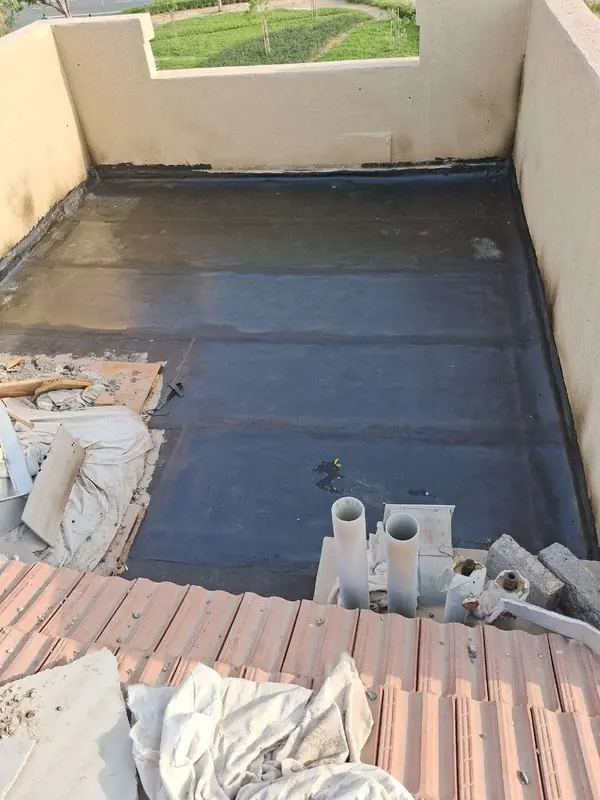
Real photos from our jobs.


Rated 5.0 by the people whose homes we’ve worked on.
Every review is from a real client on our public Google Business profile.
Outstanding company — changed my 3 bathrooms completely in 4 weeks. Walls and floors redone, new sealing, bathtub replaced with a rain shower, everything while I was away. Very professional and good value.
Excellent response time. Very professional and cost effective. Not in the habit of overcharging.
Highly recommended for any maintenance issues or any work that requires a contractor. These guys know their stuff.
Did an excellent job on my room ceiling. The finish is flawless and the attention to detail is commendable. Highly satisfied with their service.
Balcony & Terrace — your questions answered.
Straight answers. If yours isn’t here, send it on WhatsApp.
Send two or three photos of the stain or area. We’ll tell you what it probably is and whether it needs a visit.
Can a balcony be waterproofed without removing the tiles?
Only when the leak is from grout or sealant. If water is getting under the tiles, the membrane and threshold detail must be rebuilt.
Do you work in apartment towers?
Yes. Tell us the building and we’ll advise what building-management approvals are usually needed before work starts.
Why does water come in under my sliding door?
Usually the membrane isn’t turned up under the threshold, or the falls direct water towards the door. Both are fixable.
Can you match my existing tiles?
If you have spare tiles we reuse them; otherwise we help you choose the closest match before work starts.
How do you prove it is fixed?
A flood test: the balcony is ponded and checked inside and below before re-tiling.
Can I install a glass enclosure without affecting the waterproofing?
It is possible, but the frame fixings must not puncture the membrane unsealed, and the enclosure changes how the balcony drains and ventilates. In towers, building-management approval is usually required first. We recommend checking the membrane before installation so any repairs are done while access is easy.
Is it safe to put large planters on a waterproofed terrace?
Yes, if they are planned for. Heavy planters should sit on protection boards or feet so they do not damage the membrane, and built-in planters need their own lining and drainage. Planters placed directly against walls without these measures are a frequent cause of damp in the rooms behind them.
Can AC condensate damage balcony waterproofing?
Not the membrane itself if it is intact, but constant dripping keeps grout and sealant wet, encourages staining and quickly finds any weak joint. Condensate should be piped into a drain that is bonded into the membrane. If your outdoor unit drips onto the tiles, it is worth rerouting.
Related services

Flat, sloped and podium roofs — torch-on bitumen under screed, or UV-resistant liquid membranes on exposed roofs with AC plinths, solar frames and pipe penetrations detailed properly.
Roofs, terraces, wet areas, planters and foundations treated as one system — so water stopped on the roof doesn’t simply find the next weak joint.

Shower trays, floor wastes and wall junctions sealed with a continuous wet-area membrane — so water stays in the bathroom, not the ceiling below.
Fix the leak once.
Properly.
Tell us what you’re seeing. We’ll find the cause, show you the evidence and quote the right fix.