
Roof Waterproofing in Dubai
Flat, sloped and podium roofs for villas, homes and office buildings. We find where the roof is actually failing, install the right membrane system and flood-test it before handover.
- Free site inspection
- Written quotation
- Warranty-backed work


5.0 ★★★★★
205 Google reviews
Villas & buildings
Flat, sloped, podium and utility roofs
Torch-on or liquid
System chosen for exposure and finish
Flood-tested
Ponded and checked below before handover
Written warranty
Workmanship guarantee on every roof
A roof leak is rarely the whole roof.
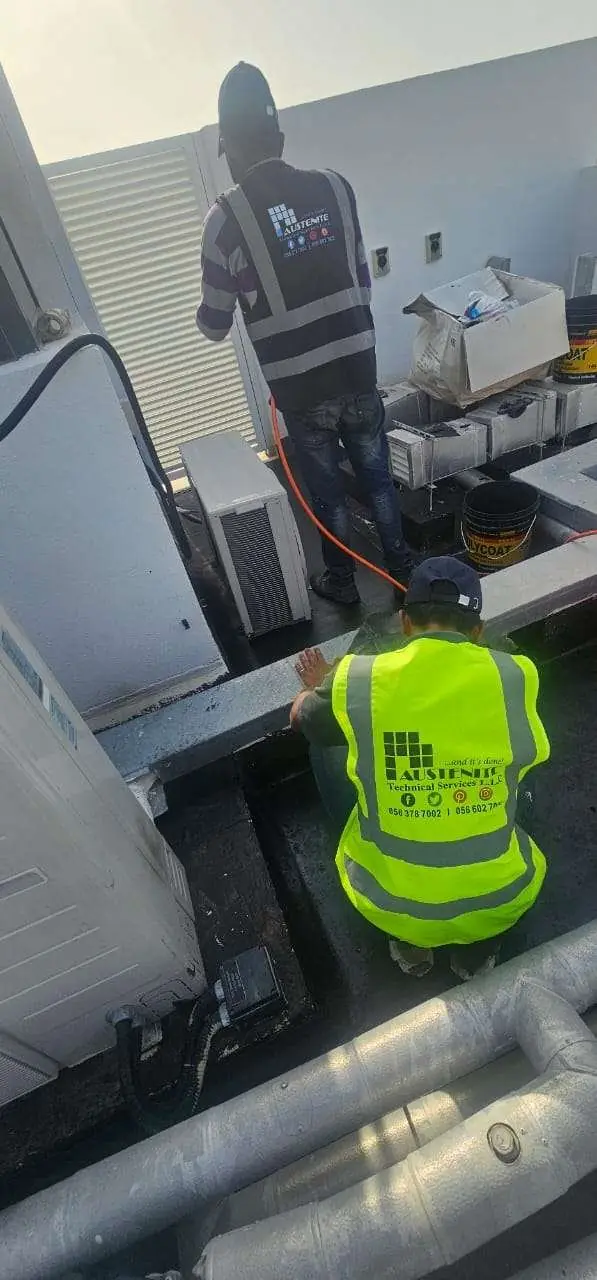
Dubai roofs take extreme surface heat, sudden heavy rain and constant foot traffic from AC servicing. Over time screeds crack, sealants shrink and the joints around AC plinths, drains, parapets and pipe sleeves open up — and that is where most water gets in.
Patching the stain inside or painting another coat on top rarely lasts. We inspect first, trace the entry point and then decide whether the roof needs local repair, a new top coat or a full membrane system.
- Ceiling stains or bubbling paint on the top floor
- Water dripping from light fittings after rain
- Cracked, chalky or peeling roof coating
- Standing water days after rain or AC discharge
- Damp, musty smell in top-floor rooms
- Gaps around AC plinths, drains or pipe sleeves
Every type of roof we waterproof.
Each roof type gets a system specified for its slope, exposure and what will sit on top of it.
Flat concrete roofs
Torch-on membrane under screed and tiles, or exposed liquid systems.
Villa roofs & terraces
Including parapets, planters and roof-top seating areas.
Podiums & car-park decks
Trafficked decks that need a protected, durable membrane.
Exposed utility roofs
UV-resistant reflective coatings around AC and tank areas.
Sloped & metal roofs
Coatings and sealing for sandwich-panel and sheet roofs.
Roofs with solar or AC
Detailing around frames, plinths and cable penetrations.
How we carry out roof waterproofing.
Every stage is photographed for your report, and nothing is covered until it has passed a water test.
Inspect the roof
Thermal and moisture checks, plus drains, falls and every penetration.
Strip & prepare
Remove failed layers, repair cracks and clean back to a sound substrate.
Prime & detail
Primer for bond, then corners, drains and upstands reinforced first.
Install the membrane
Torch-on sheets with sealed laps, or liquid membrane to the specified thickness.
Flood test
Roof ponded and the space below checked for moisture.
Protect & hand over
Screed, tiles or reflective top coat, then written warranty.
Choosing the right system.
Specified after inspection — the surface, exposure and finish decide, not habit.
Torch-on bitumen membrane
Reinforced sheets heat-welded to the slab — the standard choice for roofs that will be covered.
- Sealed, overlapped seams
- Very robust once protected
- Ideal for new screed and tiling
Liquid / PU membrane
A seamless coat that follows every detail and can be left exposed with a UV-resistant top coat.
- No seams to fail
- Good around complex details
- Reflective finish reduces heat
Mesh-reinforced coating
Fibre mesh embedded in coating layers to bridge hairline cracks on an existing roof.
- Less demolition
- Bridges minor cracking
- Suits sound existing roofs
A practical guide to roof waterproofing in Dubai
A roof membrane is only as good as the decisions made before the first roll is laid. This guide explains how roof waterproofing in Dubai is chosen, prepared, installed and looked after, so you can compare proposals with confidence, plan around the work and keep the finished system performing through long summers and the occasional heavy downpour that tests every roof.
How do you choose the right roof system for Dubai's climate?
Start with what the roof will be used for. A roof that will carry screed, tiles, seating or planters needs a membrane that can sit protected under a hard finish, while a roof that only sees maintenance visits can be left exposed with a reflective top coat. Foot traffic from AC technicians, window cleaners and tank servicing should also count, because service routes wear far faster than untouched areas.
Heat is the second deciding factor. Summer surface temperatures make a roof slab expand by day and contract at night, so the system must stay flexible across that cycle and bridge the movement at joints and parapet corners. Insulation matters too: where insulation boards sit on the roof, the position of the membrane relative to them changes how the build-up behaves and should be confirmed before anything is ordered.
Finally, consider what is already there. Some products bond poorly to old bitumen, previous coatings or contaminated screed, so compatibility with the existing layers decides whether stripping is needed. Coastal properties near the sea also face salt air, which attacks metal fixings and frames around the membrane. A good specification accounts for all of this rather than defaulting to one favourite product.
What affects the cost of roof waterproofing?
Every roof is priced on its own conditions, which is why two quotations for roofs of a similar size can look very different. The biggest variable is usually what has to come off before new work begins: a sound surface needs light preparation, whereas wet screed, failed membranes or loose tiles mean demolition, disposal and rebuilding before any waterproofing starts.
Detail density matters as much as area. A small roof crowded with AC plinths, solar frames, pipe sleeves and drains can take longer than a larger open roof, because each penetration is reinforced and sealed by hand. Access is another factor in towers and gated communities, where material lifting, permits and working hours shape the programme. An itemised quotation shows exactly where the effort sits.
- Condition of existing layers and how much must be removed
- Number of AC units, drains, sleeves and upstands
- Chosen system and the protection layer above it
- Access, lifting and building-management restrictions
- Whether screed falls need correcting to reach the drains
How should you prepare before roof work starts?
A little planning on the owner’s side keeps the job moving. Clear the roof of stored furniture, plant pots and loose items, and let your AC maintenance company know the dates, because units may need to be raised, disconnected briefly or have condensate lines re-routed so the membrane can pass underneath them properly. Tell us about any earlier repairs, as hidden patches often explain unusual readings during inspection.
If you live in a community or tower, check building-management rules early. Many require a work permit, insurance details and agreed working hours before contractors can access the roof. Share any developer drawings you hold, and photograph existing ceiling stains so changes can be compared after the work. Agreeing material storage and crew access in advance avoids delays on the first morning.
How long does roof waterproofing take?
Duration depends on roof size, how much removal is needed and the system chosen. Preparation is often the longest stage, especially when old screed has to be broken out and the slab must dry before priming. Liquid systems are applied in coats, and each coat needs to cure before the next goes on, so the weather and the manufacturer’s data sheet set the pace more than the crew does.
In summer, work is concentrated in the early hours, which can stretch the calendar even if the total effort is unchanged. Once the membrane is complete, the flood test typically runs for 24 to 48 hours, followed by any screed, tiles or top coat. Your quotation includes a schedule for these stages, so you know when the roof will be out of use and when it is handed back.
How do you make a waterproofed roof last?
Most roof failures after a good installation come from what happens on top of it later. AC technicians dragging equipment, new satellite dishes screwed through the surface and solar installers drilling fixings can all puncture a membrane in minutes. Ask anyone working on the roof to use protected walkways, and call us before any new penetration so it can be sealed into the system rather than simply patched with silicone.
Routine care is simple. Keep drains and gutters free of sand, leaves and pigeon debris, especially before the cooler months when rain is more likely, and check that AC condensate is piped to a drain rather than dripping on one spot. Look over exposed coatings once a year for chalking or cracks, because a timely top coat is far less disruptive than a full replacement.
- Clear drains of sand and debris regularly
- Route AC condensate into drains, not onto the surface
- Report new fixings or penetrations before they are made
What are the signs of a poorly installed roof membrane?
If a roof was waterproofed recently and still leaks, the cause is usually in the details rather than the main field. Membranes that stop short of the parapet, laps that lift at the edges, drains sitting above the surrounding finish and AC plinths simply coated around rather than reinforced are all common findings. Blisters in an exposed coating can also indicate moisture trapped beneath it during application.
Ponding after rain often points to screed laid without proper falls, which keeps water sitting on the membrane far longer than it was designed for. When we inspect a previously treated roof, thermal imaging and moisture meters help show whether the failure is local or widespread, and the written report explains the cause, which is useful if you need to raise it with the original contractor.
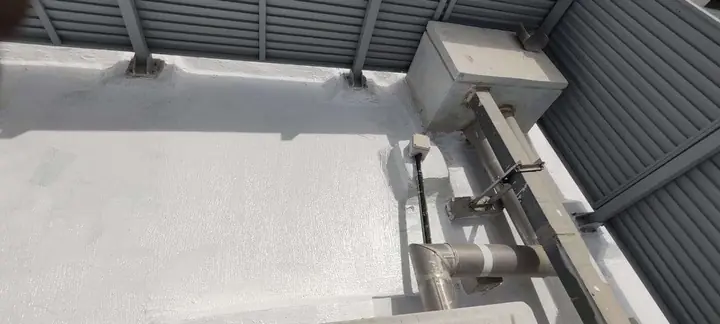
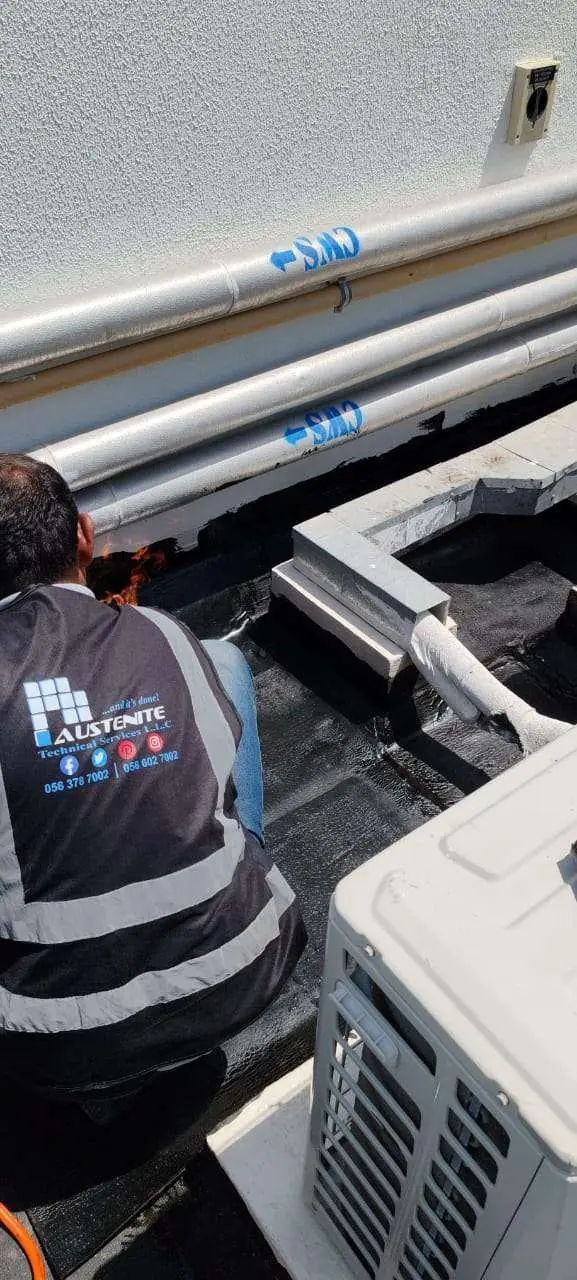
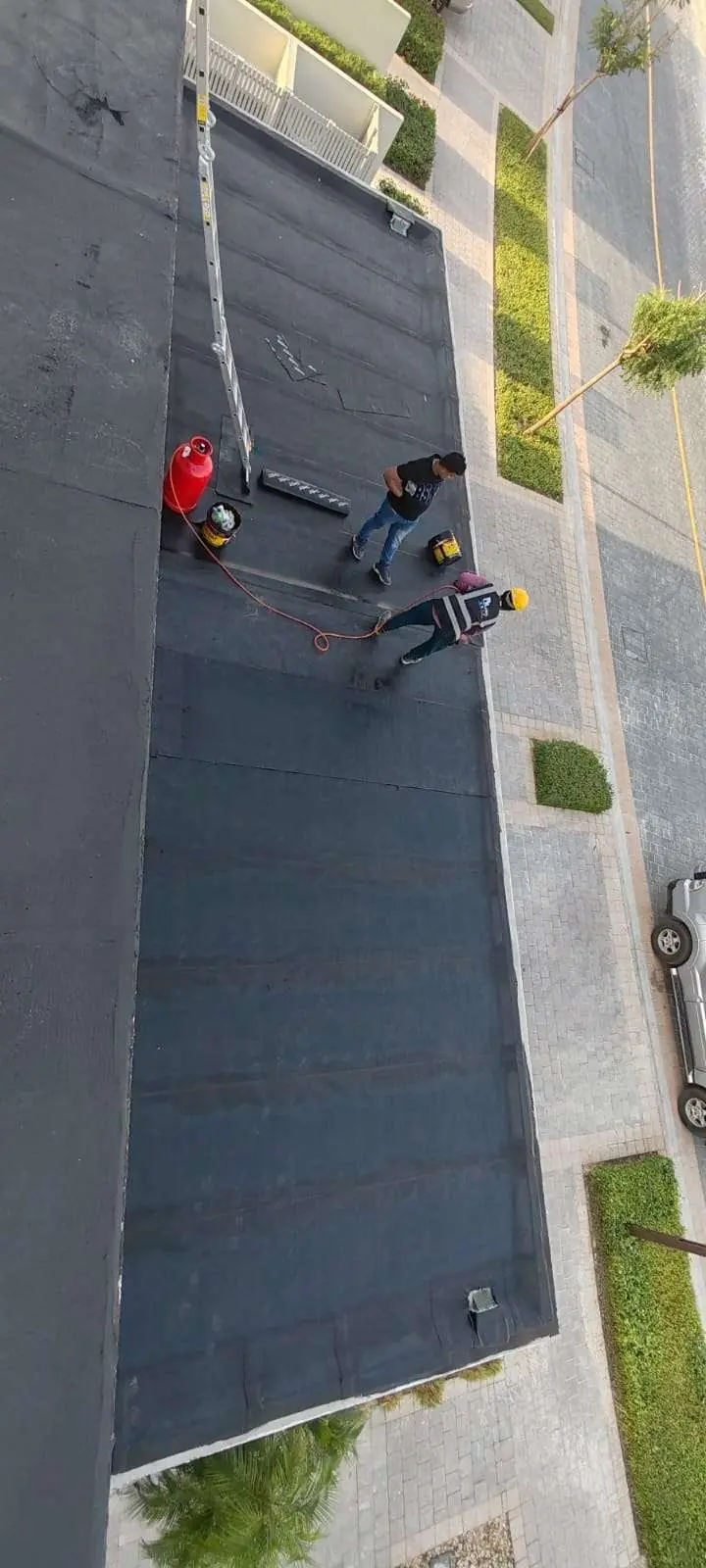
Real photos from our jobs.


Rated 5.0 by the people whose homes we’ve worked on.
Every review is from a real client on our public Google Business profile.
Outstanding company — changed my 3 bathrooms completely in 4 weeks. Walls and floors redone, new sealing, bathtub replaced with a rain shower, everything while I was away. Very professional and good value.
Excellent response time. Very professional and cost effective. Not in the habit of overcharging.
Highly recommended for any maintenance issues or any work that requires a contractor. These guys know their stuff.
Did an excellent job on my room ceiling. The finish is flawless and the attention to detail is commendable. Highly satisfied with their service.
Roof Waterproofing — your questions answered.
Straight answers. If yours isn’t here, send it on WhatsApp.
Send two or three photos of the stain or area. We’ll tell you what it probably is and whether it needs a visit.
How do I know if my roof needs full waterproofing or just a repair?
If the leak comes from one failed detail — a drain, an AC plinth or a pipe sleeve — a local repair is often enough. If the membrane has failed across the roof, or there is no membrane under the screed, a full system is the lasting fix. The inspection tells you which, with photos.
Can you waterproof a roof without removing the tiles?
Sometimes. Over sound tiles we can apply a liquid membrane system after preparation. If water is already trapped in the screed below, the tiles and wet screed usually need to come up first.
Which is better for a Dubai roof — bitumen or liquid membrane?
Torch-on bitumen suits roofs that will be covered with screed or tiles. Liquid and PU membranes suit exposed roofs and complex details, with a UV-resistant top coat. We recommend after seeing the roof.
Can roof waterproofing be done in summer?
Yes. Roof work is scheduled for the cooler early hours and each manufacturer’s temperature limits are followed.
What is a flood test?
The finished membrane is ponded with water — typically for 24 to 48 hours — and the space below is checked before the protection layer goes on.
Does roof waterproofing help keep the top floor cooler?
A reflective top coat on an exposed system can reduce the heat the slab absorbs, which may help top-floor rooms feel more comfortable. The main job of the membrane is still keeping water out, so insulation and AC performance remain separate matters worth discussing during the inspection.
Related services

Reinforced sheets heat-welded with sealed overlaps — the workhorse for roofs and podiums.
Sealing and coating systems for sandwich-panel, metal sheet and tile roofs — plus reflective finishes that cut heat gain.

Thermal imaging and moisture mapping trace the actual entry point, so you pay to fix the cause — not to break tiles hunting for it.
Fix the leak once.
Properly.
Tell us what you’re seeing. We’ll find the cause, show you the evidence and quote the right fix.