

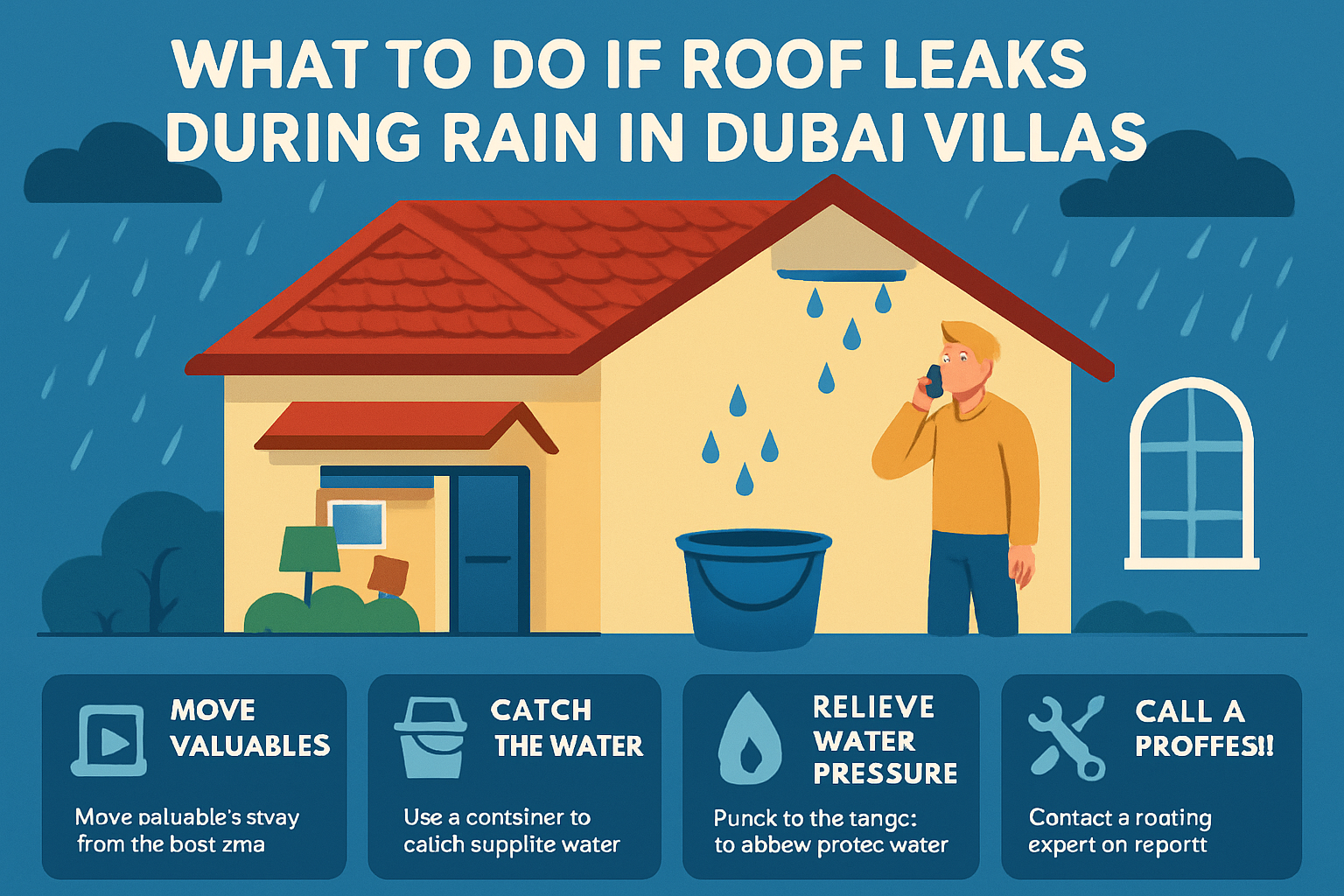
Roof leakage during rain is one of the most stressful situations for villa owners in Dubai. Water dripping from ceilings, damp walls, and sudden damage to interiors can escalate quickly if not handled properly.
The key is not to panic, but to act immediately and correctly. This guide provides a clear step-by-step approach to manage roof leakage during rain and prevent further damage.
Step 1: Stay Calm and Assess the Situation
The first step is to understand the severity of the leakage.
Check:
- Is water dripping continuously or occasionally?
- Which area is affected (ceiling, wall, corner)?
- Is the leakage spreading?
This helps determine whether it is a minor issue or a serious waterproofing failure.
Step 2: Protect Your Interior
Preventing damage inside the villa should be your immediate priority.
Actions:
- Place buckets or containers under dripping areas
- Move furniture, carpets, and electronics away
- Cover valuable items with plastic sheets
- Switch off electricity in affected areas if water is near sockets
This step minimizes damage while you handle the root problem.
Step 3: Identify the Possible Source
If it is safe to do so, try to locate the source of leakage.
Common roof leakage points:
- Cracks in roof slab
- Waterproofing membrane failure
- Parapet wall joints
- Around AC units or pipes
Do not attempt risky roof access during heavy rain.
Step 4: Apply Temporary Emergency Fix
Temporary solutions can reduce water entry until permanent repair is done.
Quick fixes:
- Apply waterproof sealant on visible cracks
- Use waterproof tape or bitumen patch
- Cover affected roof area with tarpaulin if accessible
These are short-term measures and should not replace proper repair.
Step 5: Clear Roof Drainage
Blocked drainage can worsen leakage significantly.
Actions:
- Remove debris from drainage outlets
- Ensure water is flowing freely
- Check for standing water accumulation
Proper drainage reduces pressure on weak areas.
Step 6: Control Water Spread
Sometimes water spreads internally before showing at one point.
Tip:
- Track damp areas on ceiling or walls
- Identify direction of water movement
- Monitor if leakage increases with rainfall intensity
This information helps professionals identify the root cause later.
Step 7: Avoid Common Mistakes
Many homeowners make errors that worsen the situation.
Do not:
- Apply cement on wet surfaces
- Ignore small leaks
- Delay action assuming it will stop
- Rely only on temporary fixes
Improper actions can lead to more damage.
Step 8: Schedule Professional Inspection Immediately
Once the rain stops, a detailed inspection is essential.
Inspection includes:
- Roof condition assessment
- Waterproofing system evaluation
- Crack and joint analysis
- Drainage performance check
Without proper inspection, repairs may fail again.
Step 9: Carry Out Permanent Waterproofing
Temporary fixes must be followed by permanent solutions.
Recommended methods:
- PU waterproof coating
- Bitumen membrane system
- Cementitious waterproofing
- Crack injection and sealing
The correct method depends on the root cause.
Step 10: Test the Repair
After repair, proper testing ensures the issue is resolved.
Methods:
- Flood test (water ponding test)
- Moisture level check
- Visual inspection
This confirms long-term protection.
Why Roof Leakage Happens Suddenly During Rain
Many villa owners are confused because leakage appears only during rain.
Explanation:
- Continuous water exposure reveals weak areas
- Water pressure increases on damaged waterproofing
- Ponding accelerates seepage
The issue already exists but becomes visible during rain.
Long-Term Prevention Tips
To avoid future leakage:
- Conduct annual roof inspection
- Maintain drainage systems regularly
- Reapply waterproofing every few years
- Fix cracks immediately when noticed
Preventive maintenance is always more cost-effective than repairs.
Final Thoughts
Roof leakage during rain in Dubai requires quick action and the right approach. While temporary fixes can control immediate damage, only professional waterproofing can provide a permanent solution.
Ignoring the issue can lead to structural damage, mold growth, and costly repairs.