

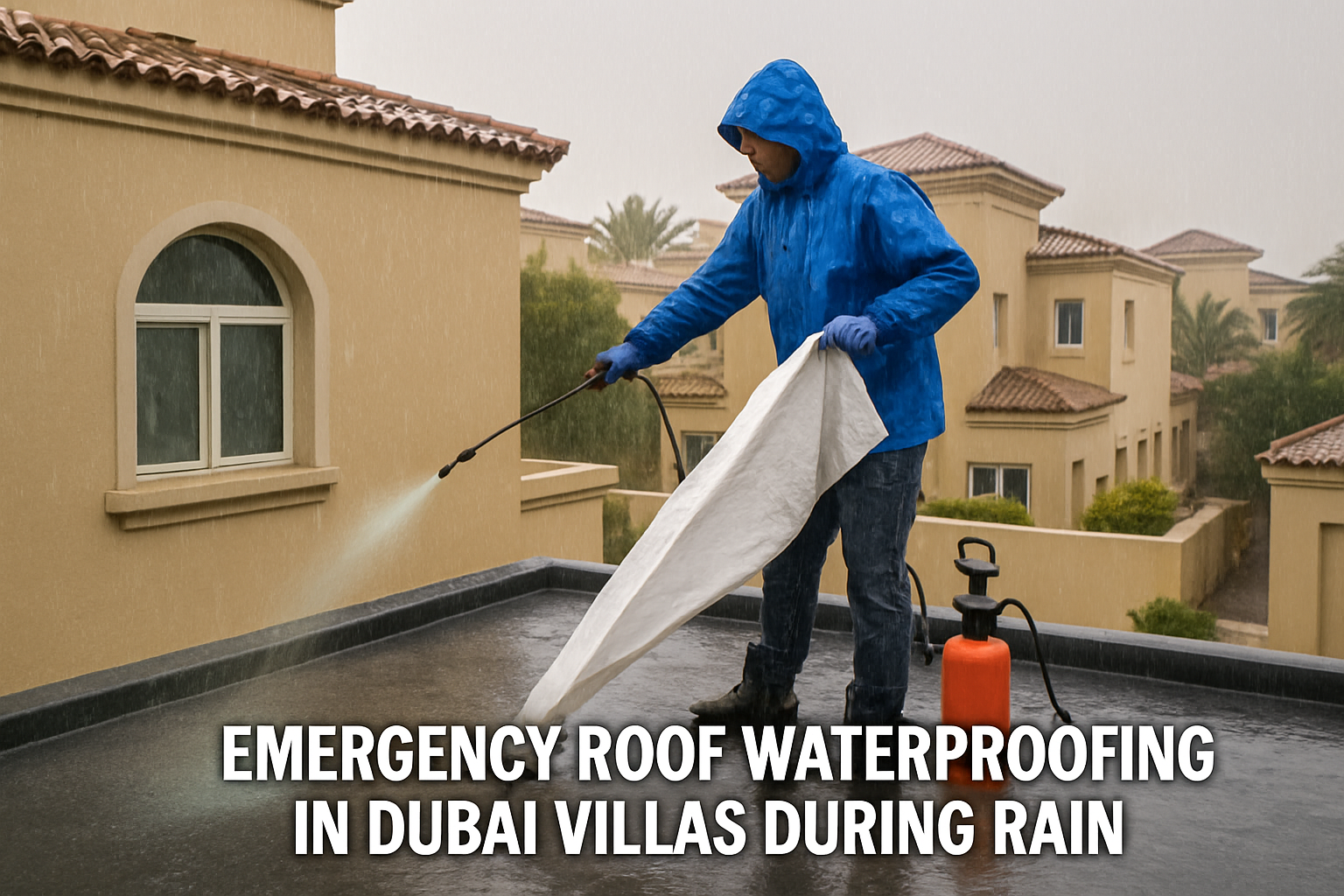
Heavy rainfall in Dubai, although rare, can cause serious damage to villas—especially when roof waterproofing systems fail. Many homeowners experience sudden leakage, ceiling dampness, or water dripping indoors during storms, often without any prior warning.
In such situations, immediate action is critical. Emergency waterproofing solutions can help control damage, protect interiors, and prevent costly structural issues.
This guide explains the most effective emergency roof waterproofing solutions for villas in Dubai and what steps you should take during heavy rain.
Common Roof Leakage Problems During Heavy Rain
Before applying any solution, it is important to understand the typical problems that occur:
- Water ponding on flat roofs
- Cracks in waterproofing membrane
- Blocked drainage outlets
- Damaged roof joints and parapet areas
- Failed previous waterproofing systems
These issues become critical when exposed to continuous rainfall.
Immediate Actions to Take During Roof Leakage
When leakage starts during rain, quick response can reduce damage significantly.
Step 1: Control Interior Damage
- Place buckets or containers under leakage points
- Move furniture and electronics away from affected areas
- Switch off electrical supply in the affected zone if required
Step 2: Identify Visible Source
- Check ceiling areas where water is entering
- Inspect roof (only if safe) for standing water or cracks
Step 3: Temporary Sealing
Apply quick temporary solutions until permanent repair is possible.
Emergency Roof Waterproofing Solutions
1. Temporary Crack Sealing
Cracks are one of the most common entry points for water.
Solution:
- Use waterproof sealants or PU sealant to close visible cracks
- Apply directly on dry or slightly damp surfaces if accessible
Benefit:
Prevents further water penetration temporarily.
2. Waterproof Tarpaulin Covering
For severe leakage, covering the affected roof area is effective.
Solution:
- Place heavy-duty waterproof sheets or tarpaulin over leaking zones
- Secure properly to prevent movement due to wind
Benefit:
Blocks direct rainwater exposure.
3. Emergency Bitumen Patch Repair
Bitumen-based materials are widely used for quick repairs.
Solution:
- Apply bitumen tape or liquid bitumen over leaking areas
- Focus on joints, cracks, and membrane gaps
Benefit:
Provides immediate waterproof barrier.
4. PU Liquid Waterproof Coating (Quick Application)
Polyurethane coatings are highly effective even in urgent cases.
Solution:
- Apply a fast-curing PU coating on affected roof sections
- Ensure minimal surface moisture for better adhesion
Benefit:
Creates a flexible and durable waterproof layer.
5. Drainage Clearance
Blocked drains can worsen leakage quickly.
Solution:
- Remove debris from roof drains
- Ensure proper water flow away from the roof
Benefit:
Prevents water accumulation and reduces pressure on weak areas.
6. Water Diversion Technique
If immediate repair is not possible, redirecting water can help.
Solution:
- Create temporary channels using sandbags or boards
- Guide water toward functional drainage points
Benefit:
Minimizes water exposure to damaged areas.
What Not to Do During Emergency Leakage
Avoid these common mistakes:
- Do not apply cement directly on wet surfaces
- Do not ignore small cracks assuming they are harmless
- Do not attempt risky roof access during heavy rain
- Do not rely only on temporary fixes for long-term protection
Permanent Waterproofing Solution After Rain
Emergency solutions are temporary. Once the rain stops, a proper repair must be carried out.
Recommended permanent solutions:
- Complete roof inspection
- Removal of damaged waterproofing layers
- Application of high-quality waterproofing system:
- PU coating
- Bitumen membrane
- Cementitious waterproofing
- Proper slope correction for drainage
- Flood testing to confirm effectiveness
Importance of Professional Inspection
Emergency repairs often fail if the root cause is not identified correctly.
Professional inspection ensures:
- Accurate source detection
- Use of proper waterproofing systems
- Long-term durability
- Avoidance of repeated leakage issues
Experts use advanced tools such as:
- Thermal imaging cameras
- Moisture detection meters
- Flood testing methods
Why Villas in Dubai Are More Vulnerable
Dubai villas are particularly prone to leakage due to:
- Flat roof designs
- Extreme temperature variations
- Rapid construction timelines
- Occasional but intense rainfall
These factors make proper waterproofing and maintenance essential.
Final Thoughts
Roof leakage during heavy rain in Dubai is not just an inconvenience—it is a warning sign of underlying waterproofing failure.
Immediate emergency action can reduce damage, but only professional repair can ensure long-term protection.
Ignoring the issue can lead to:
- Structural damage
- Mold and dampness
- Expensive repairs
Need Emergency Waterproofing in Dubai?
We provide:
- Emergency roof leakage repair
- Villa waterproofing solutions
- Water leakage inspection
- Thermal imaging detection
- Permanent waterproofing systems
Fast response available across Dubai during rain emergencies.