
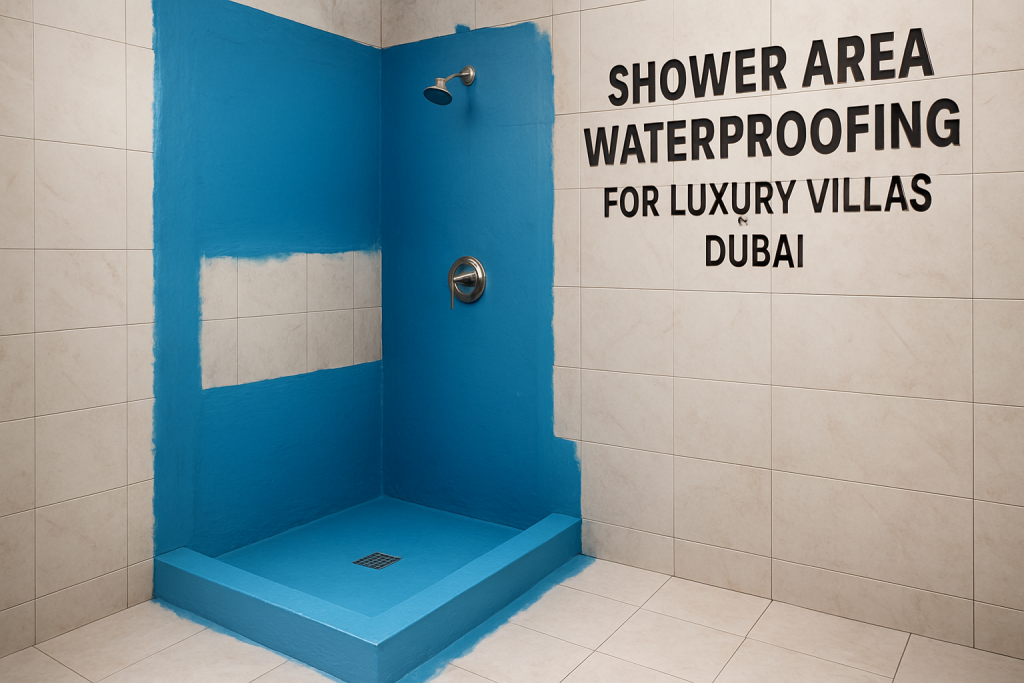
In luxury villas, bathrooms are designed with high-end finishes such as marble tiles, glass showers, and premium fittings. However, even the most luxurious bathroom can suffer serious damage if the shower area is not properly waterproofed.
The shower zone is the most water-exposed part of any bathroom. Without a waterproof membrane beneath the tiles, water can seep through grout lines and cracks, gradually reaching the concrete slab and surrounding walls. Over time, this can lead to damp walls, ceiling leaks in rooms below, and structural deterioration.
Professional shower waterproofing ensures that water stays within the shower area while protecting the entire villa structure.
Why Shower Area Waterproofing is Critical
Shower areas receive daily direct water exposure, which makes them the highest-risk zones for moisture penetration.
Proper waterproofing helps:
- Prevent water leakage into walls and floors
- Protect concrete slabs from moisture damage
- Stop mold and mildew growth
- Maintain the durability of tiles and finishes
- Protect ceilings and rooms located below the bathroom
Without waterproofing, water can slowly penetrate behind tiles because grout and tiles themselves are not completely waterproof.
Key Areas That Must Be Waterproofed in a Shower
For effective protection, waterproofing should not be limited to the shower floor alone.
Critical areas include:
Shower Floor
The floor receives continuous water flow. Waterproof membranes are installed beneath tiles to prevent water from penetrating the slab.
Shower Walls
Waterproofing should extend up the walls in the splash zone to prevent moisture penetration behind tiles.
Wall-to-Floor Junctions
Corners where walls meet floors are common leakage points and require special sealing tapes and membranes.
Around Drains and Pipes
Drainage outlets and plumbing penetrations must be sealed carefully to prevent hidden leaks.
Experts recommend sealing corners, drains, and pipe penetrations because these areas are especially vulnerable to leakage.
Best Waterproofing Systems for Luxury Villa Showers
Different waterproofing methods are used depending on bathroom design and structural requirements.
Liquid Waterproofing Membrane
Liquid membranes create a seamless protective coating beneath tiles. They are flexible and ideal for irregular shower shapes.
Cementitious Waterproofing
Cement-based coatings bond strongly with concrete and are commonly used beneath bathroom tiles.
Polyurethane Waterproofing
Polyurethane waterproofing provides high flexibility and durability, making it suitable for luxury villas where structural movement may occur.
Waterproof Sealing Tape
Special sealing tapes are installed in corners and joints to reinforce the waterproofing layer and prevent leakage.
Waterproofing Process for Shower Areas
Professional waterproofing contractors usually follow a systematic installation process.
1. Surface Preparation
The shower floor and walls are cleaned and leveled. Any cracks or defects are repaired before waterproofing.
2. Primer Application
A primer is applied to improve adhesion between the concrete surface and waterproof membrane.
3. Waterproof Membrane Installation
Liquid or sheet membranes are applied to create a continuous waterproof barrier.
4. Joint and Corner Reinforcement
Waterproof tapes and sealants are installed around corners, pipes, and drainage outlets.
5. Waterproof Testing
A flood test is conducted to verify that the waterproofing layer is leak-proof before tiles are installed.
Testing ensures that the waterproofing system is functioning properly before finishing works begin.
Benefits of Professional Shower Waterproofing
Proper waterproofing provides several advantages for luxury villas.
These include:
- Long-term leak protection
- Prevention of mold and dampness
- Improved bathroom durability
- Protection of surrounding rooms and ceilings
- Reduced long-term repair costs
A properly waterproofed shower area helps maintain the beauty and functionality of luxury bathrooms.
Common Waterproofing Mistakes to Avoid
Many shower leakage problems occur due to incorrect installation practices.
Some common mistakes include:
- Skipping waterproof membranes beneath tiles
- Not sealing floor and wall junctions
- Using poor-quality grout or sealants
- Installing improper drainage slopes
Professional waterproofing specialists ensure these issues are avoided during installation.
Conclusion
Shower area waterproofing is a critical part of bathroom construction in luxury villas. Because shower zones are exposed to constant water flow, proper waterproofing membranes and sealing systems are essential to prevent leaks and structural damage.
By investing in professional waterproofing services, villa owners can ensure their luxury bathrooms remain durable, hygienic, and leak-free for many years.