

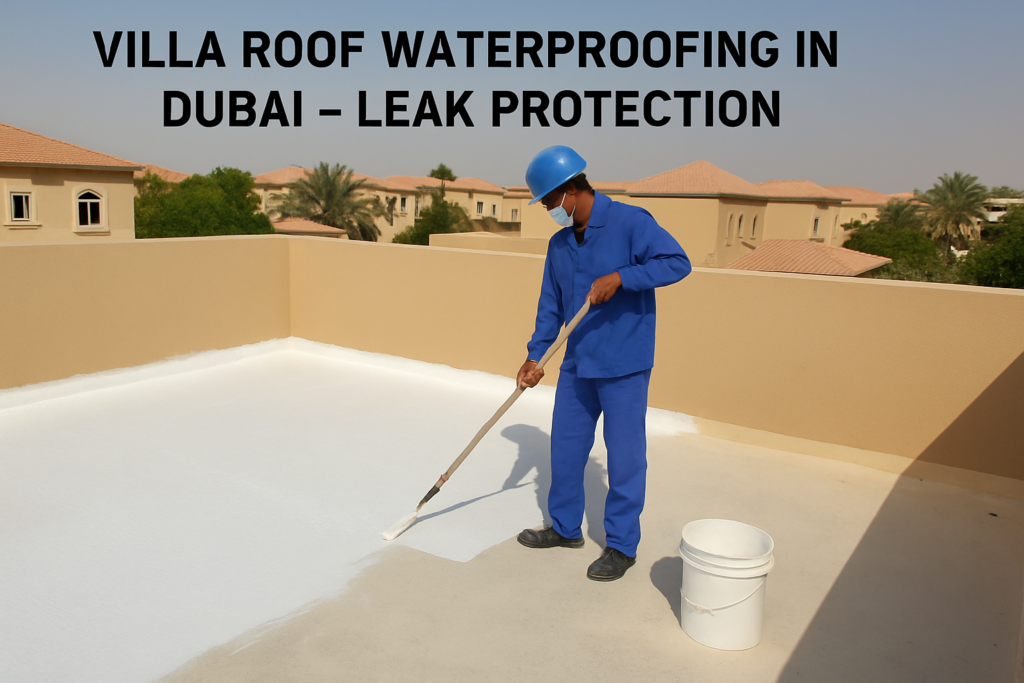
Roof leakage is one of the most common waterproofing problems faced by villa owners in Dubai. Villa roofs are constantly exposed to extreme heat, sunlight, occasional heavy rainfall, and environmental dust. Over time, these conditions can damage roof surfaces and create cracks that allow water to penetrate the structure.
If roof waterproofing is not properly installed or maintained, water can seep into the concrete slab and cause serious damage to ceilings, walls, and electrical systems. Villa roof waterproofing is therefore essential for protecting the structural integrity of the property and preventing expensive repair work.
Understanding how roof waterproofing works can help homeowners maintain their villas and avoid long-term damage.
Why Villa Roofs Are Vulnerable to Water Damage
Most villas in Dubai have flat concrete roofs, which makes them more susceptible to water accumulation compared to sloped roofs.
Several factors contribute to roof leakage problems:
- Continuous exposure to extreme sunlight
- Thermal expansion and contraction of concrete
- Cracks forming in roof slabs
- Blocked drainage outlets
- Poor waterproofing installation during construction
When water accumulates on a roof surface, it slowly penetrates through cracks and weak points in the structure.
Common Signs of Roof Waterproofing Failure
Homeowners should watch for early signs of roof waterproofing issues. Identifying these signs early can prevent serious structural damage.
Typical warning signs include:
- Water stains appearing on ceilings
- Damp patches on upper-floor walls
- Paint peeling from ceiling surfaces
- Mold or mildew growth
- Water dripping during rainfall
These symptoms often indicate that the waterproofing membrane on the roof has deteriorated or cracked.
Major Causes of Roof Leakage in Villas
Roof leakage can occur for several reasons, especially in villas that have been exposed to environmental conditions for many years.
Cracks in Concrete Slabs
High temperatures in Dubai can cause concrete to expand and contract. This movement creates small cracks in the roof slab, allowing water to enter the structure.
Damaged Waterproofing Membranes
Over time, waterproofing membranes may deteriorate due to heat exposure and aging. Once the membrane is damaged, water can easily penetrate the roof surface.
Poor Drainage Systems
Blocked roof drains prevent rainwater from flowing away properly. Standing water increases the risk of leakage and structural damage.
Improper Waterproofing Installation
Some villas experience roof leakage because waterproofing systems were not installed correctly during construction.
Types of Roof Waterproofing Systems Used in Villas
Different waterproofing solutions are used depending on the structure and condition of the roof.
Bituminous Membrane Waterproofing
Bituminous membranes are widely used for villa roofs. These membranes create a durable barrier that prevents water from penetrating the concrete surface.
Liquid Waterproofing Membrane
Liquid waterproofing materials are applied as coatings that form a seamless protective layer over the roof surface.
Polyurethane Waterproofing
Polyurethane coatings provide flexible waterproof protection and are often used for exposed roofs.
Cementitious Waterproofing
Cement-based waterproofing is sometimes used for roof areas that require strong bonding with concrete surfaces.
Benefits of Roof Waterproofing for Villas
Proper roof waterproofing provides several long-term benefits for villa owners.
These include:
- Protection against roof leakage
- Prevention of structural damage
- Reduced maintenance costs
- Improved durability of building materials
- Increased property value
Roof waterproofing also helps maintain indoor comfort by preventing moisture buildup and mold growth.
Importance of Regular Roof Inspections
Even well-installed waterproofing systems require periodic inspection and maintenance.
Villa owners should schedule roof inspections to check for:
- Cracks in roof surfaces
- Damaged waterproofing layers
- Blocked drainage outlets
- Loose roof tiles or protective layers
Regular inspection helps identify potential issues before they develop into major problems.
Professional Roof Waterproofing Services
Roof waterproofing requires technical expertise, proper surface preparation, and the correct selection of waterproofing materials.
Professional waterproofing contractors perform detailed inspections and apply waterproofing systems designed for long-term protection.
Specialized companies such as Waterproofing Dubai provide professional roof waterproofing solutions tailored for villas in Dubai.
Conclusion
Villa roof waterproofing plays a critical role in protecting homes from water leakage and structural damage. Dubai’s climate conditions can gradually weaken roof structures, making waterproofing an essential maintenance requirement.
By investing in professional waterproofing services and conducting regular roof inspections, homeowners can prevent costly repairs and extend the lifespan of their villas.
A well-maintained waterproofing system ensures that the villa remains safe, durable, and protected from water damage for many years.