

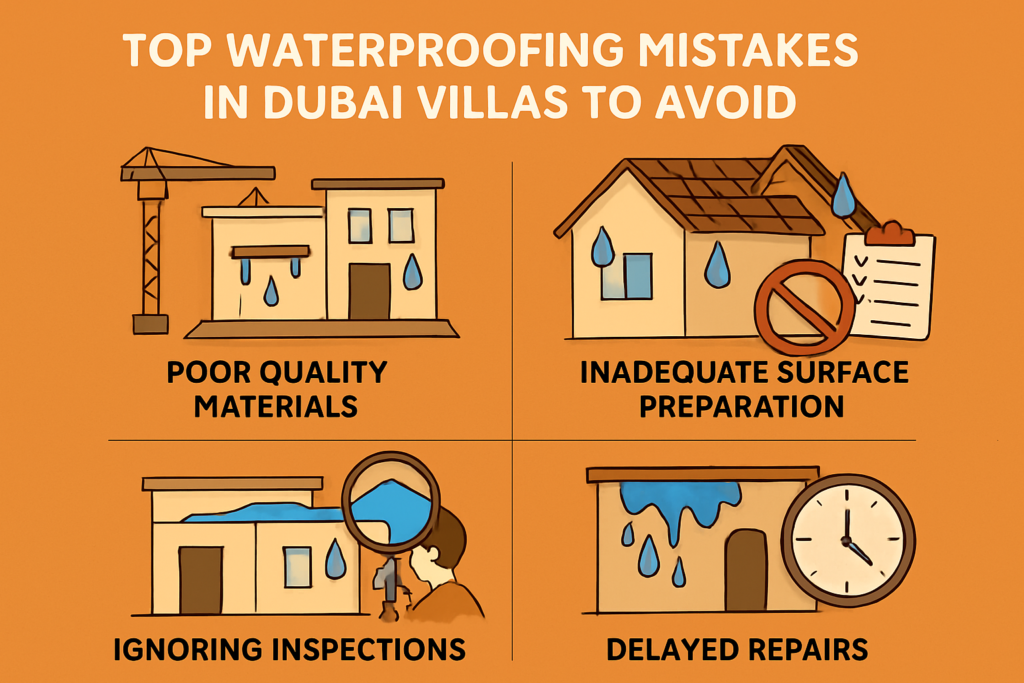
Top Waterproofing Mistakes in Dubai Villas (And How to Avoid Them)
Waterproofing failures in Dubai villas rarely happen overnight. In most cases, leaks, dampness, and concrete damage appear months or even years after construction or renovation. When investigated, the cause is almost always the same: avoidable waterproofing mistakes.
Dubai’s climate is harsh on buildings. Extreme heat, UV exposure, sudden rainfall, humidity, and thermal movement demand specialized waterproofing systems and correct application methods. Unfortunately, many villas suffer damage not because waterproofing was ignored—but because it was done incorrectly.
This guide highlights the most common waterproofing mistakes in Dubai villas, why they happen, and how professional waterproofing prevents long-term damage.
Why Waterproofing Fails in Dubai Villas
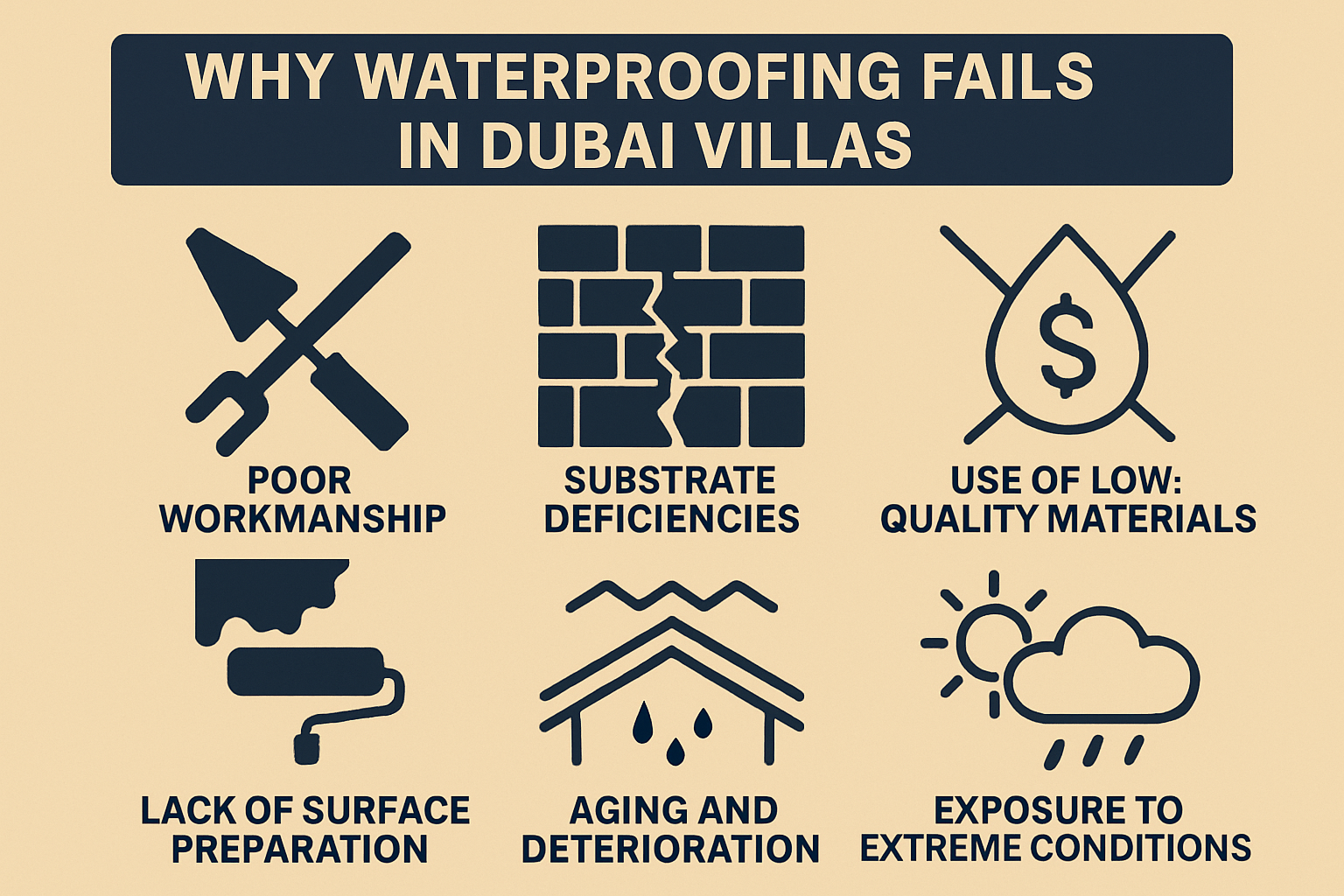
Most failures are caused by:
- Wrong material selection
- Poor workmanship
- Cost-cutting decisions
- Ignoring climate-specific requirements
Waterproofing is a technical process, not just a coating job. Small errors at the beginning can lead to major structural and interior damage later.
1. Choosing the Wrong Waterproofing System
One of the biggest mistakes is using a one-size-fits-all waterproofing solution.
Why This Fails
- Some materials crack under heat
- Others degrade quickly under UV exposure
- Certain systems can’t handle ponding water
- Rigid products fail on moving concrete
How to Avoid It
Each villa roof, floor, or wall requires a system based on:
- Surface type
- Exposure level
- Usage
- Existing condition
Professional evaluation ensures the right system is used in the right location.
2. Using Paint Instead of Waterproofing
This is one of the most common and costly mistakes in Dubai villas.
Why This Fails
- Paint is not waterproofing
- Paint has no crack-bridging ability
- Paint peels under moisture pressure
- Paint provides no long-term protection
How to Avoid It
Always use certified waterproofing systems, not decorative or protective paints marketed as “water-resistant.”
3. Poor Surface Preparation
Even the best waterproofing material will fail if applied on a poorly prepared surface.
Common Preparation Errors
- Applying over dust or debris
- Ignoring existing cracks
- Not removing old failed waterproofing
- Skipping primers
Result
- Poor adhesion
- Peeling membranes
- Water traveling underneath the system
Solution
Surface preparation is 50% of waterproofing success and must never be rushed.
4. Ignoring Roof Slopes and Drainage
Waterproofing cannot compensate for bad drainage design.
Why This Is a Problem
- Standing water weakens membranes
- Increases risk of seepage
- Accelerates material failure
Correct Approach
- Fix slopes before waterproofing
- Ensure proper drainage outlets
- Eliminate ponding areas
Waterproofing works best when water flows away, not when it sits on the surface.
5. Skipping Expansion Joints and Detail Areas
Most leaks don’t come from flat surfaces — they come from details.
High-Risk Areas Often Ignored
- Expansion joints
- Parapet walls
- Pipe penetrations
- AC bases
- Corners and edges
These areas move more and require special detailing, not standard coating.
6. Applying Waterproofing in Extreme Weather Conditions
Dubai’s weather demands careful timing.
Why This Causes Failure
- High heat affects curing
- Humidity traps moisture
- Sudden rain damages uncured layers
Best Practice
Waterproofing should be applied:
- During suitable temperature windows
- Under controlled conditions
- Following manufacturer guidelines
7. Choosing the Cheapest Contractor
Low-cost waterproofing almost always results in repeat failures.
What Cheap Jobs Usually Mean
- Low-grade materials
- Unskilled labor
- Skipped steps
- No proper warranty
Waterproofing is an investment. Cutting costs often leads to double spending later.
8. Ignoring Internal Waterproofing Areas
Many villa owners focus only on roofs and forget internal wet areas.
Commonly Missed Areas
- Bathrooms
- Showers
- Balconies
- Kitchens
- Utility rooms
Leaks from these areas often spread silently behind tiles and walls.
9. No Testing or Quality Checks After Waterproofing
Waterproofing without testing is a gamble.
Why Testing Matters
- Confirms system integrity
- Identifies weak points early
- Prevents future surprises
Professional contractors conduct flood tests or inspection checks before handover.
10. Delaying Waterproofing Until Damage Appears
This is the most expensive mistake of all.
Why Waiting Costs More
- Water damages concrete
- Mold spreads inside walls
- Repairs become invasive
- Interior finishes are affected
Preventive waterproofing costs far less than repair waterproofing.
How Professional Waterproofing Prevents These Mistakes
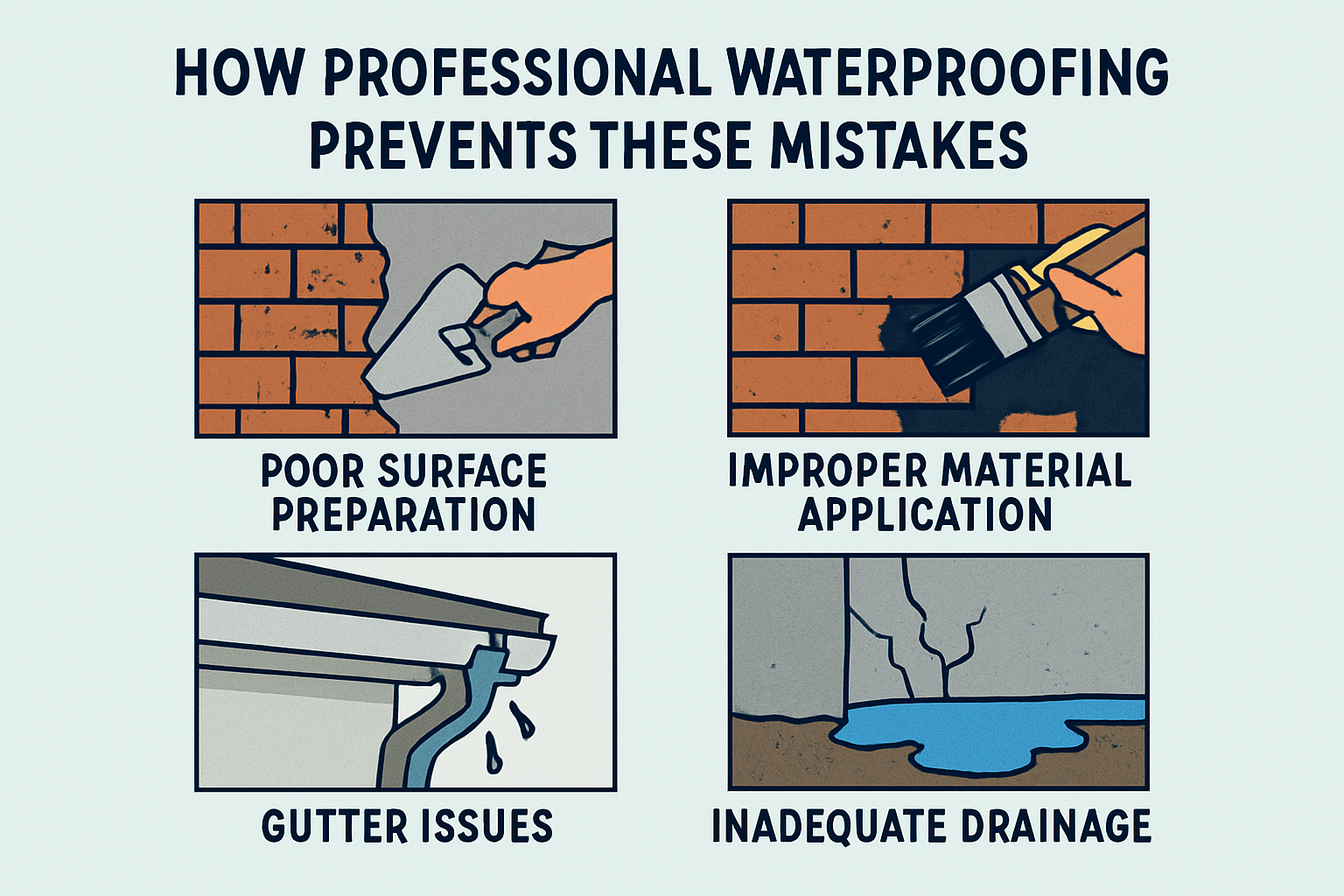
Professional waterproofing services ensure:
- Correct system selection
- Proper surface preparation
- Climate-appropriate application
- Attention to detail areas
- Long-term protection
- Warranty-backed work
Experience matters more than materials alone.
Final Thoughts: Waterproofing Mistakes Are Avoidable
Most waterproofing failures in Dubai villas are not due to bad luck — they are due to bad decisions.
Avoiding common mistakes:
- Extends your villa’s lifespan
- Protects interiors and structure
- Saves money long-term
- Preserves property value
Waterproofing done right once is always cheaper than repairing damage later.