

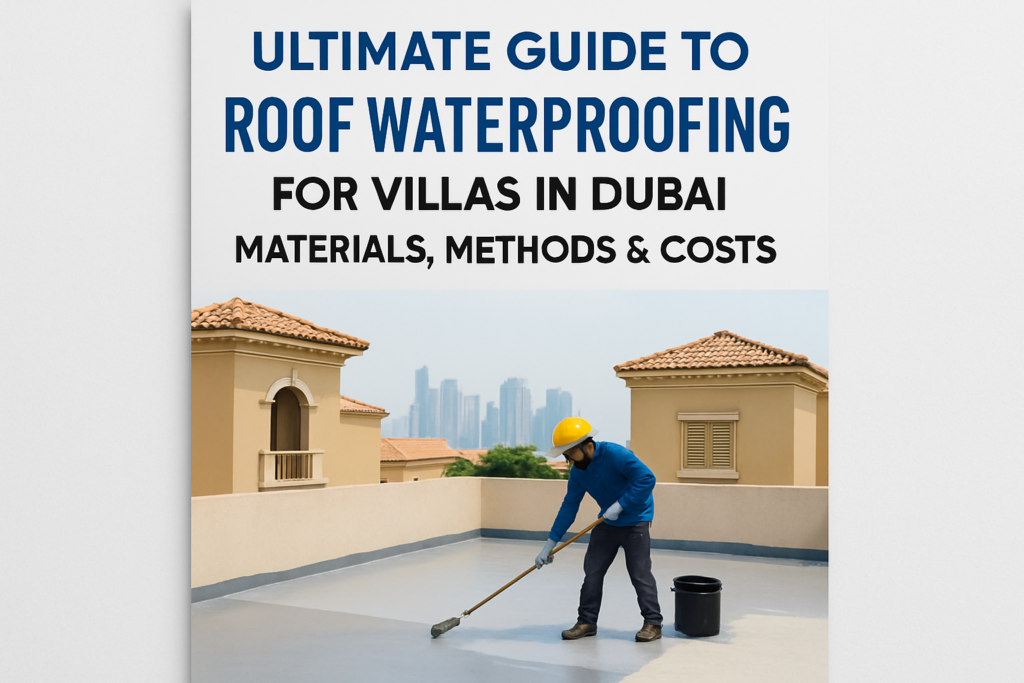
Ultimate Guide to Roof Waterproofing for Villas in Dubai: Materials, Methods & Costs
Roof waterproofing is one of the most critical protective systems in any Dubai villa. Yet, it’s also one of the most misunderstood — often ignored until leaks, cracks, or ceiling damage appear.
In Dubai’s extreme climate, roof waterproofing is not optional maintenance. It is a long-term investment that protects your villa’s structure, interiors, and value from water ingress, heat stress, and material deterioration.
This complete guide explains why roof waterproofing is essential for villas in Dubai, the best waterproofing systems, common mistakes, and realistic costs, so you can make an informed decision before damage starts.
Why Roof Waterproofing Is Essential for Villas in Dubai
Dubai villas are exposed to:
- Intense heat and UV radiation
- Sudden heavy rainfall
- High humidity
- Thermal expansion and contraction
- Aging concrete and joints
Without proper waterproofing, villa roofs develop:
- Hairline cracks
- Membrane failures
- Ponding water
- Seepage into slabs and walls
- Ceiling stains and mold
Most roof leaks start small and remain hidden until major interior damage occurs.
Common Roof Waterproofing Problems in Dubai Villas
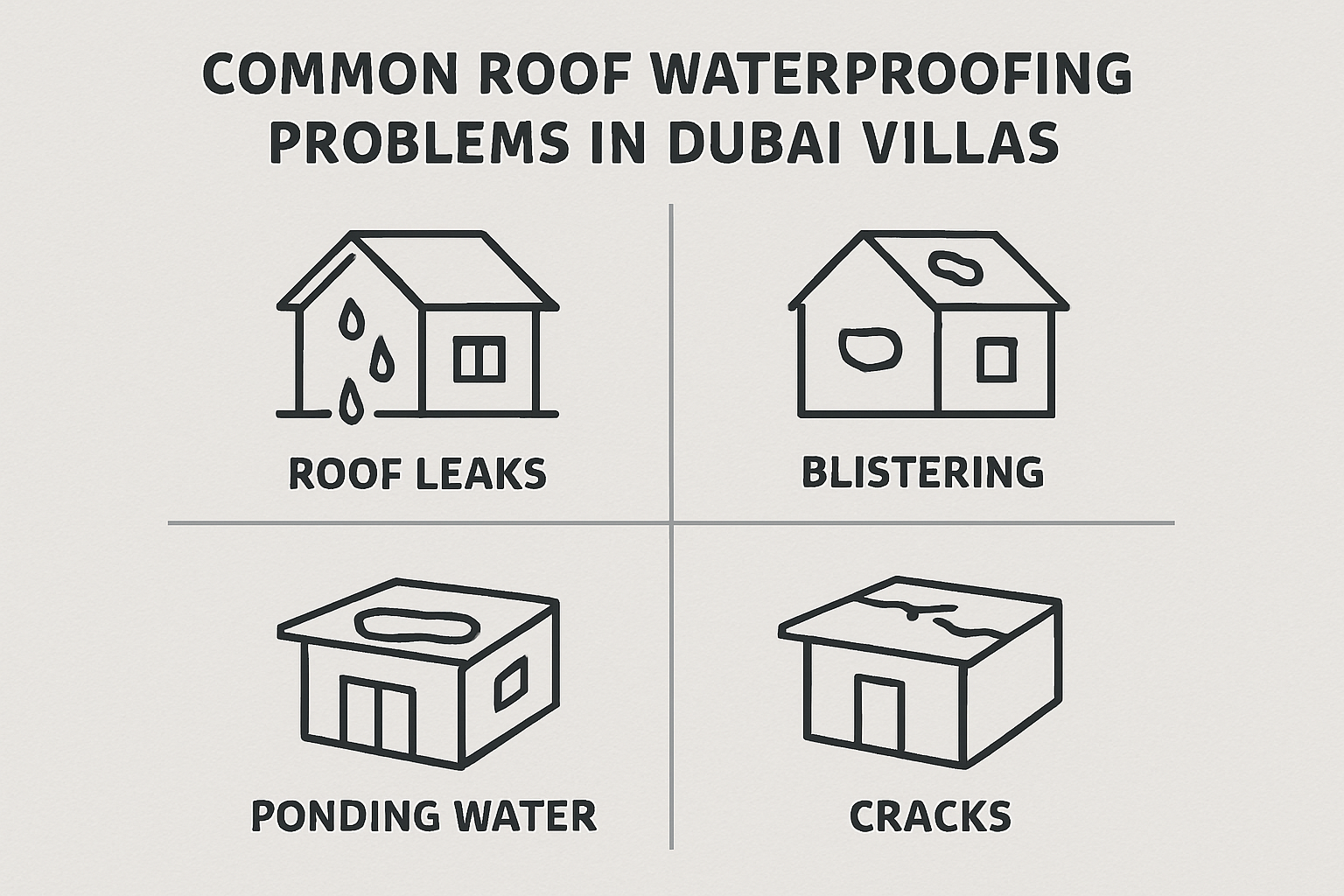
Villa roof failures usually happen due to poor system selection or improper application, not because waterproofing is unnecessary.
Typical Issues We See
- Old or damaged waterproof membranes
- Incorrect slope causing water stagnation
- UV-damaged coatings
- Open expansion joints
- Cracks in parapet walls
- Improper detailing around AC bases and pipes
Once water penetrates the slab, repairs become more expensive and disruptive.
Types of Roof Waterproofing Systems for Villas
Choosing the right waterproofing system depends on your villa’s roof type, condition, and usage.
1. Bituminous Membrane Waterproofing
Best for: Flat concrete roofs, large roof areas
Advantages:
- Strong water resistance
- Proven long-term performance
- Suitable for heavy-duty protection
Limitations:
- Requires professional torch application
- Needs UV protection layer if exposed
2. Polyurethane (PU) Liquid Waterproofing
Best for: Villas with complex roof details
Advantages:
- Seamless finish
- Excellent crack-bridging
- UV-resistant options available
- Flexible under thermal movement
Limitations:
- Surface preparation is critical
- Slightly higher cost than basic membranes
3. Cementitious Waterproofing
Best for: Non-exposed roofs, under tiles
Advantages:
- Good bonding with concrete
- Cost-effective
- Ideal as a base layer
Limitations:
- Not flexible
- Not suitable for exposed roofs alone
4. Acrylic Roof Coating Systems
Best for: Heat reflection + waterproofing
Advantages:
- Reflects heat
- Reduces roof temperature
- Easy maintenance
Limitations:
- Requires re-coating over time
- Not ideal for severe ponding areas
How to Choose the Right Roof Waterproofing System
There is no one-size-fits-all solution.
The correct system depends on:
- Roof structure and slope
- Existing waterproofing condition
- Exposure to sunlight
- Presence of equipment (AC units, tanks)
- Budget and warranty expectations
A professional waterproofing contractor evaluates these factors before recommending a system.
Roof Waterproofing Process for Villas
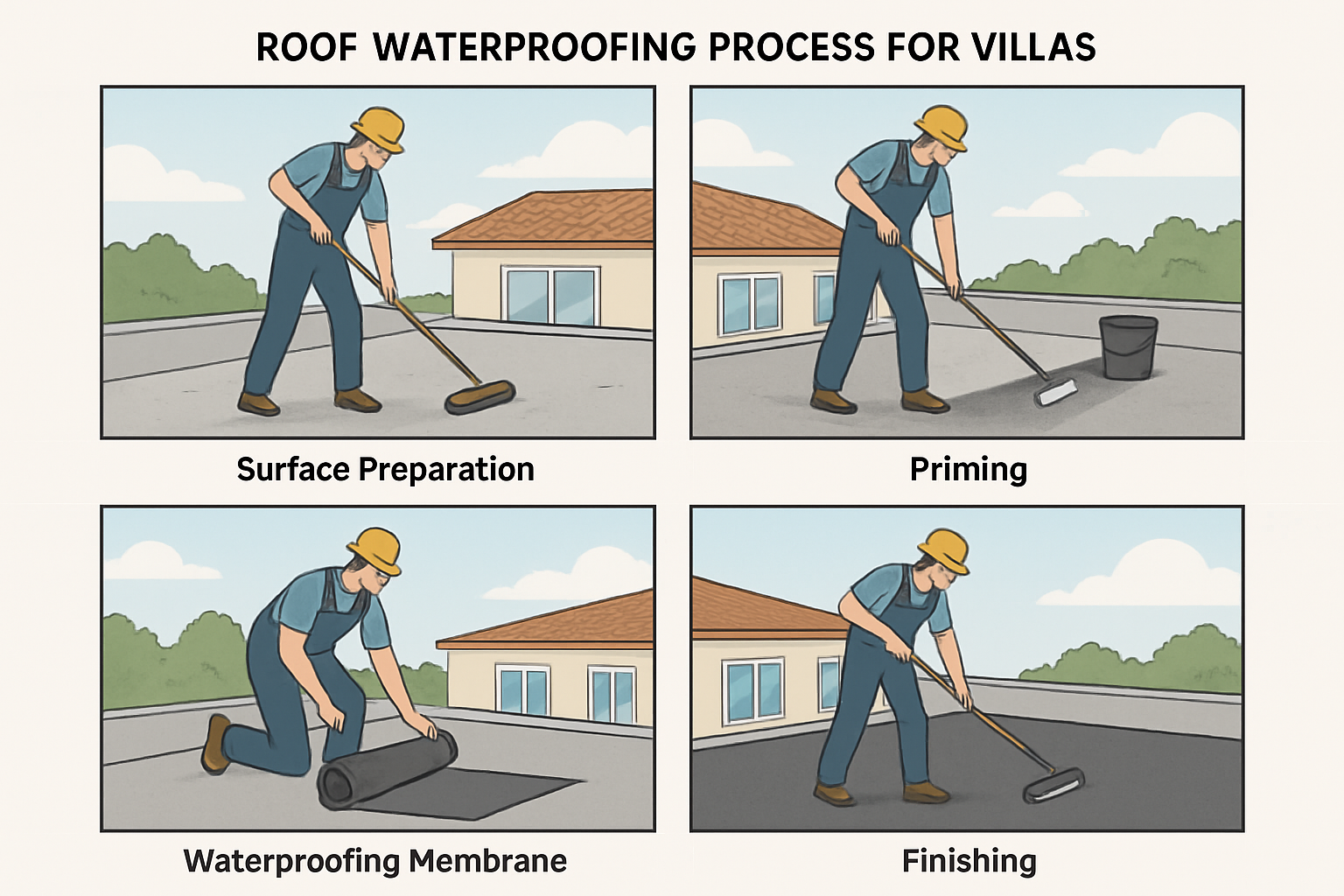
Professional roof waterproofing follows a structured approach to ensure durability.
Typical Workflow
- Roof surface inspection and cleaning
- Removal of damaged or failed waterproofing
- Crack repair and joint treatment
- Primer application
- Waterproofing system installation
- Protection layer (if required)
- Final testing and handover
Skipping any step reduces the system’s lifespan.
How Much Does Roof Waterproofing Cost for Villas in Dubai?
Roof waterproofing costs vary based on system type and roof condition.
Average Cost Range (Guide Only)
- Cementitious waterproofing: AED 25 – 40 per sqm
- Bituminous membrane: AED 45 – 70 per sqm
- PU liquid waterproofing: AED 60 – 90 per sqm
- Acrylic coating systems: AED 30 – 55 per sqm
⚠️ Actual cost depends on roof size, access, repairs required, and warranty period.
Cheap waterproofing often leads to repeat failures and higher long-term costs.
Signs Your Villa Roof Needs Waterproofing Immediately
- Water stains on ceilings or walls
- Damp smell inside rooms
- Visible cracks on roof slab
- Peeling paint near roof level
- Ponding water after rain
- Mold or algae growth
If you notice even one of these, waterproofing should not be delayed.
Why Professional Roof Waterproofing Matters
Roof waterproofing is not just applying a coating — it’s a technical construction process.
Professional waterproofing ensures:
- Correct system selection
- Proper surface preparation
- Manufacturer-approved application
- Long-lasting protection
- Warranty-backed work
Improper DIY or unskilled work often fails within months.
Final Thoughts: Roof Waterproofing Is Protection, Not Repair
The best time to waterproof a villa roof is before leaks appear.
Roof waterproofing protects:
- Structural concrete
- Interior finishes
- Electrical systems
- Indoor air quality
- Property resale value
In Dubai’s climate, delaying waterproofing always costs more in the long run.