

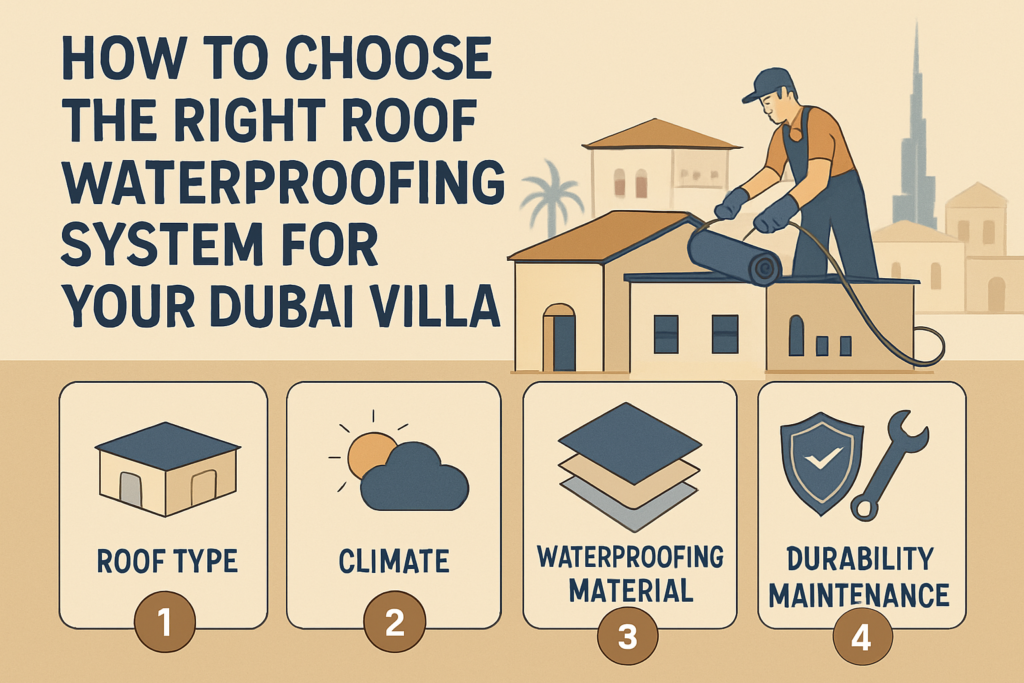
How to Choose the Right Roof Waterproofing System for Your Dubai Villa
Choosing the right roof waterproofing system for your Dubai villa is one of the most important decisions you’ll make to protect your property. With extreme heat, sudden rain, and constant thermal movement, the wrong waterproofing choice can lead to early failure, leaks, and costly repairs.
Not all waterproofing systems work the same — and what suits one villa may completely fail in another. This guide explains how to select the correct roof waterproofing system, based on your villa’s structure, usage, and long-term protection needs.
Why Choosing the Right System Matters
Many roof waterproofing failures in Dubai happen not because waterproofing was done, but because the wrong system was chosen.
A mismatched waterproofing system can:
- Crack under heat
- Peel due to UV exposure
- Trap water beneath membranes
- Fail at joints and corners
- Require frequent re-application
Selecting the right system ensures durability, performance, and peace of mind.
Key Factors to Consider Before Choosing a Roof Waterproofing System
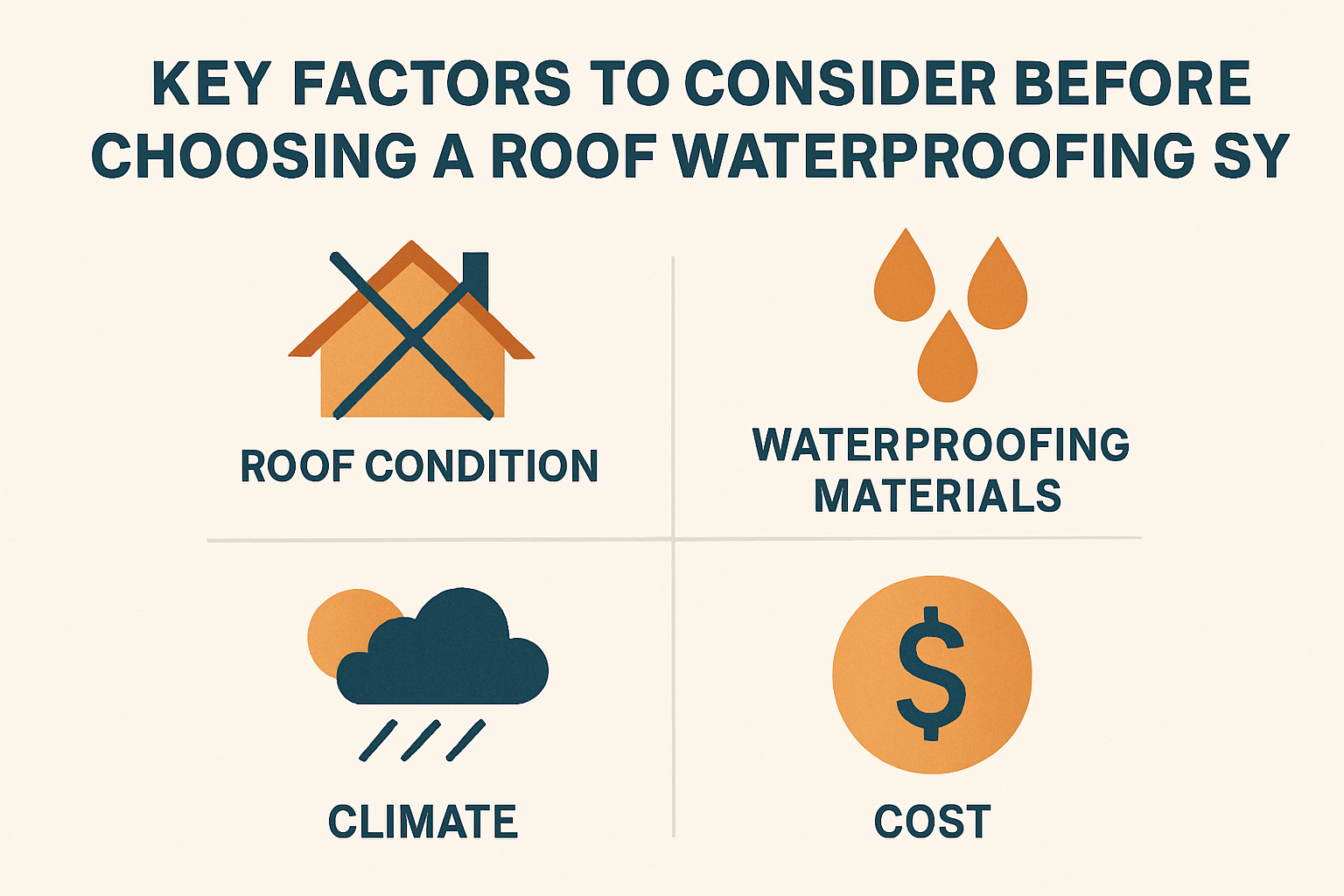
Before selecting any product, your villa roof must be assessed properly.
1. Roof Type and Structure
- Flat concrete roof
- Sloped roof
- Roof with tiles or screed
- Roof with AC units, tanks, or solar equipment
Each structure requires a different waterproofing approach.
2. Exposure to Sun and Weather
Dubai roofs experience:
- Intense UV radiation
- High surface temperatures
- Sudden rainstorms
Waterproofing systems must be:
- UV-resistant
- Flexible under heat expansion
- Resistant to aging and cracking
3. Existing Roof Condition
Your roof may have:
- Old waterproofing layers
- Hairline cracks
- Ponding water
- Structural movement
Some systems work best as replacement, others as overlay solutions.
4. Roof Usage
Ask yourself:
- Is the roof accessible?
- Will people walk on it?
- Is it purely service access?
- Will future installations be added?
Traffic-bearing roofs require stronger protection layers.
Comparing Common Roof Waterproofing Systems for Villas
Below is a clear comparison to help villa owners choose correctly.
Bituminous Membrane Waterproofing
Best for: Large flat villa roofs
Why Choose It:
- Excellent waterproofing performance
- Long service life
- Strong resistance to standing water
Things to Consider:
- Requires torch application
- Needs protective screed or coating if exposed
✔ Ideal for long-term structural protection
Polyurethane (PU) Liquid Waterproofing
Best for: Complex roofs with many details
Why Choose It:
- Seamless, joint-free system
- Excellent flexibility
- Handles cracks and thermal movement well
- UV-resistant options available
Things to Consider:
- Requires expert surface preparation
- Slightly higher upfront cost
✔ Ideal for modern villas and detailed roof layouts
Cementitious Waterproofing
Best for: Under tiles or protective layers
Why Choose It:
- Bonds well with concrete
- Cost-effective
- Works well as a base layer
Things to Consider:
- Not flexible
- Not suitable as an exposed system
✔ Ideal as a supporting waterproofing layer
Acrylic Waterproof Coating
Best for: Heat reduction and light waterproofing
Why Choose It:
- Reflects sunlight
- Reduces roof temperature
- Easy maintenance
Things to Consider:
- Limited lifespan
- Requires periodic re-coating
✔ Ideal for thermal protection and minor waterproofing needs
Which Waterproofing System Is Best for Your Villa?
There is no universal “best” system — only the right system for your roof.
Quick Guide
- Large flat roof: Bituminous membrane
- Cracked or complex roof: PU liquid waterproofing
- Roof under tiles: Cementitious waterproofing
- Heat reduction focus: Acrylic coating
Professional assessment ensures the correct recommendation.
Why Mixing Systems Can Be a Smart Solution
In many villas, a combination of systems delivers the best results.
Example:
- Bituminous membrane for base protection
- PU coating for joints and details
- Protective screed or reflective coating on top
This layered approach increases lifespan and performance.
Common Mistakes Villa Owners Make
❌ Choosing based on lowest price
❌ Applying paint instead of waterproofing
❌ Ignoring roof slope and drainage
❌ Skipping surface preparation
❌ Using non-UV resistant materials
These mistakes often lead to repeat leaks within months.
Why Professional Waterproofing Matters
Roof waterproofing is not a DIY task.
Professional waterproofing ensures:
- Correct system selection
- Proper surface preparation
- Manufacturer-approved materials
- Skilled application
- Long-term performance
Cutting corners almost always results in failure.
Choose Smart, Not Cheap
Choosing the right roof waterproofing system is about long-term protection, not short-term savings.
The correct system:
- Prevents leaks
- Protects concrete and interiors
- Withstands Dubai’s climate
- Saves money over time
Investing in the right waterproofing today avoids expensive repairs tomorrow.