

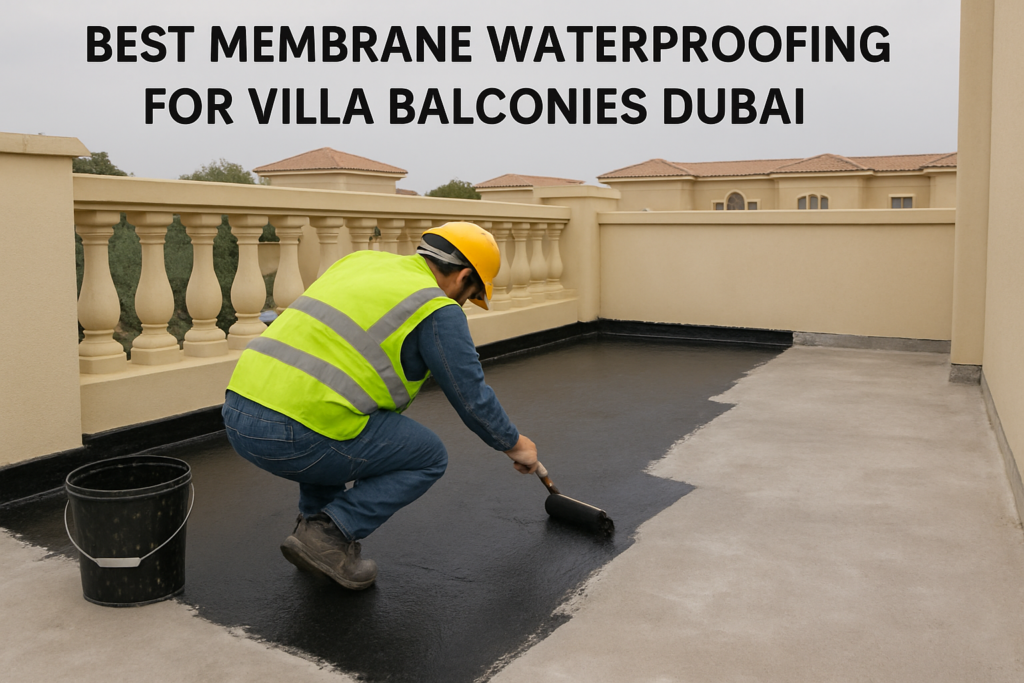
Villa balconies in Dubai are constantly exposed to sun, rain, humidity, and cleaning water. Without a proper waterproofing membrane beneath the tiles, water can seep into the concrete slab and cause ceiling leaks, wall dampness, and structural damage.
Membrane waterproofing is one of the most reliable solutions for protecting balconies from water penetration. These membranes form a protective layer that prevents moisture from entering the structure while allowing the balcony surface to remain durable and functional.
Choosing the right waterproofing membrane is essential for ensuring long-term protection.
What is Membrane Waterproofing?
Membrane waterproofing involves installing a continuous waterproof layer between the structural slab and the finishing surface such as tiles or screed. This layer blocks water from penetrating the structure and protects the building from moisture damage.
Membrane systems are widely used for balconies, terraces, roofs, and wet areas because they create a watertight barrier that protects the underlying concrete.
Best Waterproofing Membranes for Villa Balconies
1. Polyurethane Waterproofing Membrane
Polyurethane (PU) membranes are one of the most popular waterproofing solutions for balconies.
Key advantages include:
- High flexibility to accommodate structural movement
- Seamless waterproof layer
- Strong resistance to UV rays and weather
- Excellent crack-bridging ability
Polyurethane coatings are applied as a liquid and cure to form a flexible waterproof membrane that protects the balcony slab.
Because Dubai experiences extreme temperature changes, polyurethane membranes perform very well in balcony waterproofing applications.
2. Bituminous Sheet Membrane
Bituminous membranes are widely used in waterproofing projects across Dubai.
These membranes are made from modified bitumen sheets that are applied over the concrete slab.
Benefits include:
- High resistance to water penetration
- Excellent durability and strength
- Strong resistance to UV and weather conditions
- Good flexibility for structural movement
Bituminous membranes are known for their durability and are commonly used for roofs, terraces, and balconies where water exposure is high.
3. Liquid Waterproofing Membrane
Liquid membranes are another highly effective waterproofing solution.
They are applied as a liquid coating that spreads across the balcony surface and fills small cracks and pores in the concrete.
Advantages include:
- Seamless waterproof barrier
- Easy application around edges and corners
- Suitable for complex balcony shapes
- Good resistance to temperature changes
Liquid waterproofing membranes are commonly used in balcony structures because they adapt well to irregular surfaces.
4. Cementitious Waterproofing Membrane
Cement-based waterproofing coatings are also used for balconies, especially beneath tile installations.
Features include:
- Strong bonding with concrete surfaces
- Easy application using brush or roller
- Good resistance to water pressure
- Cost-effective waterproofing option
Cementitious waterproofing is often used as a base layer before tile installation in balconies and bathrooms.
Which Membrane is Best for Villa Balconies?
For most villas in Dubai, polyurethane or liquid membranes are considered the best options because they offer flexibility and durability under extreme temperatures.
However, the best membrane depends on several factors:
- Balcony size and structure
- Exposure to sunlight and rain
- Type of tile or flooring finish
- Budget and maintenance requirements
Professional waterproofing specialists usually perform an inspection before recommending the most suitable membrane system.
Important Steps for Balcony Membrane Waterproofing
Proper installation is critical for effective waterproofing. The process generally includes:
- Surface cleaning and crack repair
- Primer application for better adhesion
- Waterproof membrane installation
- Protective screed or tile layer
- Proper drainage slope and sealing
Proper preparation and installation significantly increase the lifespan of the waterproofing system.
Benefits of Membrane Waterproofing for Balconies
Using a high-quality waterproofing membrane offers several advantages:
- Prevents balcony water leakage
- Protects ceilings below the balcony
- Prevents mold and dampness
- Extends the life of tiles and concrete
- Reduces long-term repair costs
Membrane waterproofing is therefore a critical part of villa maintenance.
Conclusion
Balcony waterproofing membranes provide the most effective protection against water seepage in villas. Polyurethane membranes, bituminous sheets, liquid waterproofing systems, and cementitious coatings are among the most commonly used solutions.
Selecting the right membrane and ensuring professional installation will protect your villa balcony from water damage, structural deterioration, and costly repairs.
Proper waterproofing today ensures that villa balconies remain durable, safe, and leak-free for many years.